


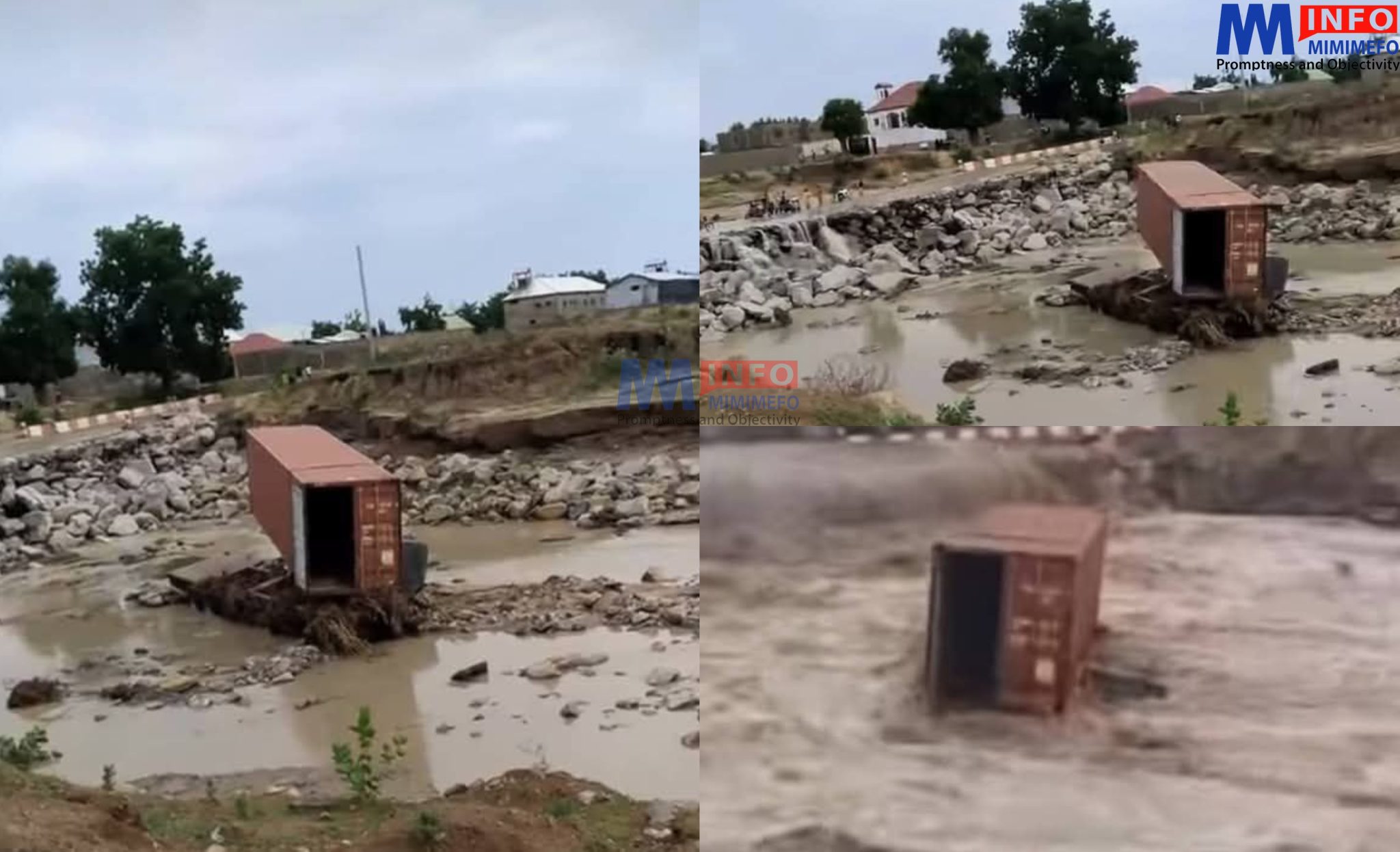
Maroua, Far North Region, Cameroon – The Palar Bridge, once a crucial link between Douala and N’Djamena via National Road No. 1, now stands as a neglected structure symbolising the long-standing inaction of public authorities. This key infrastructure along the Cameroon–Chad–Sudan trade corridor has been inoperative since its collapse, disrupting regional commerce and risking public safety.
Strategic Trade Route Severed
Located in the heart of Maroua, the Palar Bridge has historically facilitated the movement of goods and people between Southern Cameroon and neighbouring countries. Following its collapse, the corridor has faced repeated transport disruptions.
“This bridge was the backbone of regional commerce,” noted a local transporter. “Now we are completely cut off.”
Despite initial government announcements promising a quick reconstruction, work on the bridge has stalled.
Construction Project Abandoned Midway
Shortly after the incident, government officials visited the site and announced reconstruction plans. A contract was awarded to a construction firm, with an execution deadline of fewer than 18 months.
However, progress was short-lived. “The site was active for a brief period, then everything stopped,” a resident said. “The workers are gone, and even the signs showing project timelines have been removed.”
Temporary Fix Proves Dangerous
In place of the collapsed bridge, authorities built a makeshift crossing known as a radié, a basic structure meant to temporarily support vehicle passage. However, this solution has proven inadequate, especially during the rainy season.
“When the river Palar overflows, the road becomes a death trap,” said a local driver. “A recent incident saw a truck swept away by the current, resulting in multiple fatalities.”
The temporary structure is now also under threat, raising fears of complete isolation for the Palar neighborhood and surrounding areas.
Economic Consequences for the Region
The bridge’s prolonged closure has had a ripple effect on cross-border trade. Heavy-duty trucks are unable to travel between southern Cameroon and cities like Kousseri, N’Djamena, and even areas in Sudan.
Hundreds of tons of merchandise remain stranded, causing rising prices and supply chain issues throughout the subregion. “This is affecting everyone – from traders to families,” said a local shop owner.
Local Communities Demand Action
Maroua residents are calling for immediate government intervention. Despite multiple appeals, there has been no official communication on when work will resume.
“We feel forgotten,” said a student in Maroua. “The authorities don’t seem to care about what’s happening here.”
Public frustration is mounting. “How many more lives must be lost before something is done?” asked a market vendor. “Why is there such silence over a structure that’s so essential?”
National Implications of Infrastructure Neglect
The Palar Bridge case reflects broader concerns about infrastructure management in Cameroon. Critics argue that neglecting such a critical asset jeopardizes not only regional commerce but also national stability.
“The Palar Bridge is no longer just a local issue,” said an analyst in Yaoundé. “It has become a symbol of state failure and disconnect from on-the-ground realities.”

