


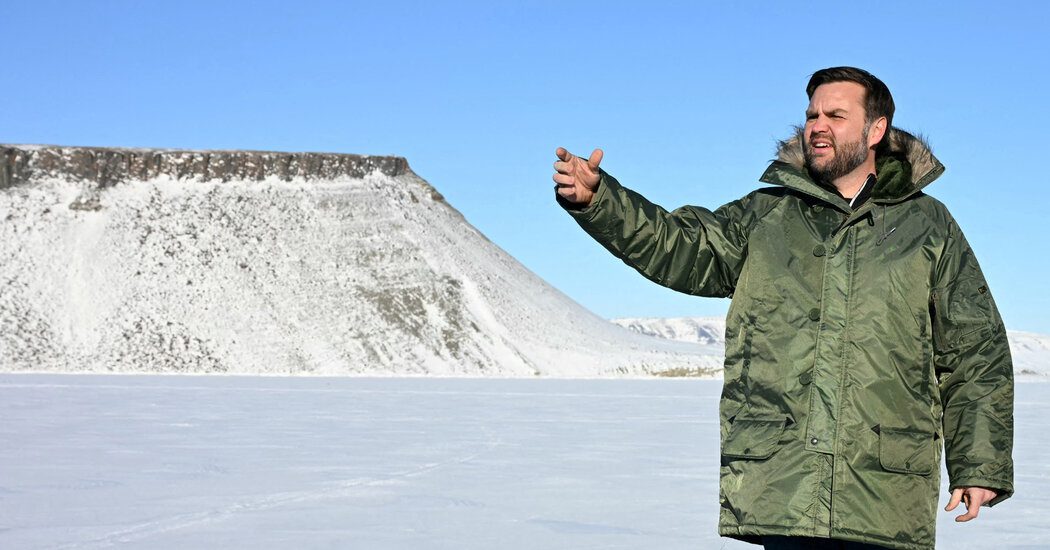
On Wednesday, January 14, 2026, JD Vance will host a closed-door meeting at the White House with the Danish and Greenlandic foreign ministers, alongside US Secretary of State Marco Rubio. At the centre of the talks is the future of the world’s largest island — and the stability of the transatlantic alliance itself.
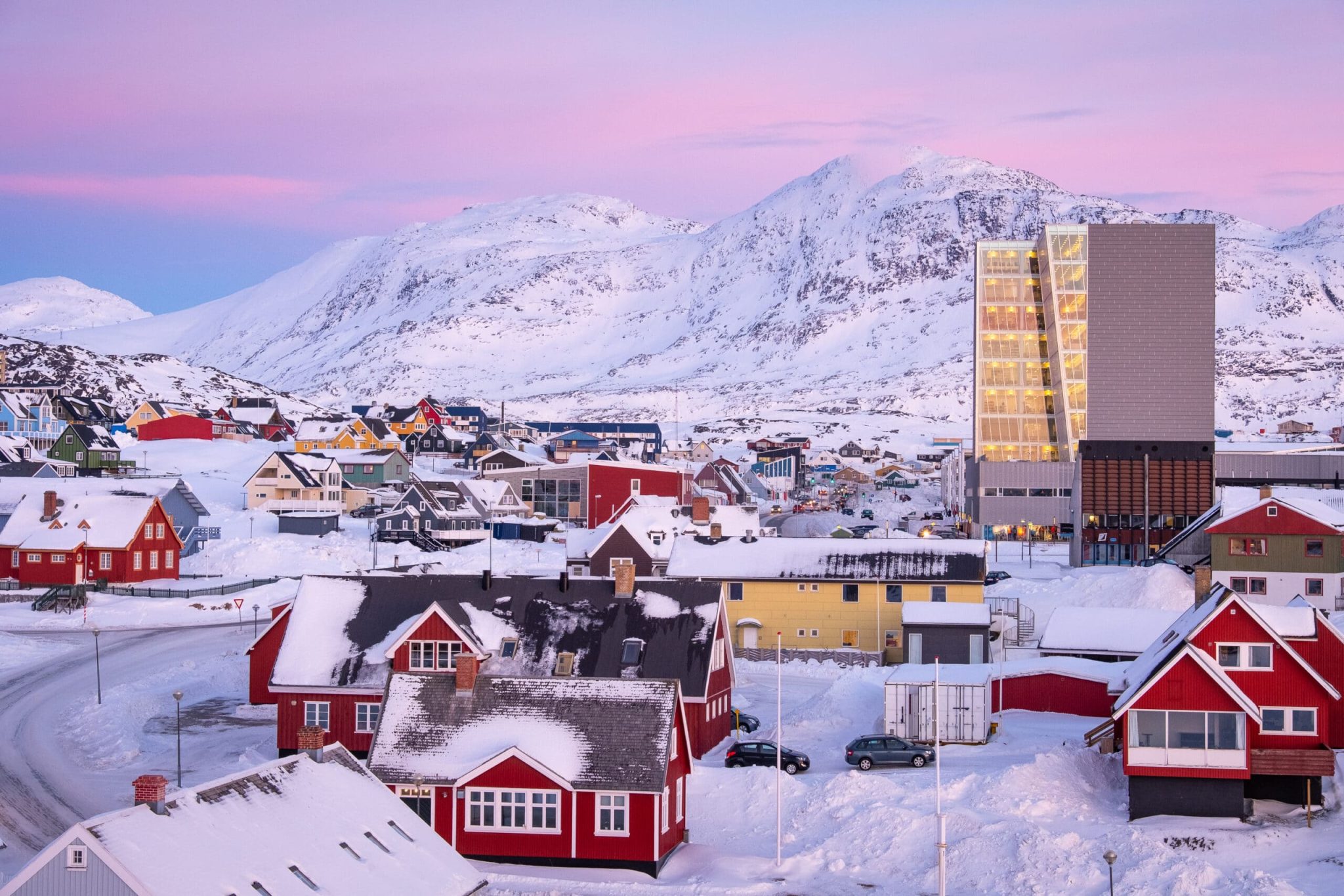
The countdown to the meeting has been palpable in Greenland’s capital, Nuuk. Above a snow-covered shopping mall, a large digital ticker flashes the same words again and again in red: Trump. Greenland. Sovereignty.
You do not need to speak Greenlandic to grasp the anxiety.
“We Are Not for Sale”
US President Donald Trump says he wants Greenland and will take it “the easy way or the hard way.” After his recent controversial military action in Venezuela, many Greenlanders are taking that threat seriously.
“I would like to encourage Donald Trump to use both his ears wisely, to listen more and to speak less. We are not for sale. Our country is not for sale,” said Amelie Zeeb, pulling off her chunky sealskin mittens — pualuuk — to gesture emphatically.
Inuit writer and musician Sivnîssoq Rask echoed that sentiment. “My hope is for our country to be independent and well-managed and not be bought,” she said.
For others, the concern is deeply personal. Maria, cradling her seven-week-old baby inside her winter coat, told me: “I worry for the future of my young family. We don’t want all this attention here!”
Yet international attention on Greenland is not going away.
A Nato Rift in the Making
Greenland is a semi-autonomous territory of Denmark, and the dispute now pits two Nato allies — Denmark and the United States — against one another.
Danish Prime Minister Mette Frederiksen has warned that if the US were to seize Greenland by force, it would spell the end of the transatlantic defence alliance Europe has relied on for decades.
Such a move would also further damage US-European relations, already badly strained since Trump’s return to the White House. European leaders are desperate to keep Washington engaged — not least to secure US backing for a sustainable peace deal in Ukraine.
The stakes could hardly be higher.
Trump’s Security Argument
President Trump insists Greenland is vital for US national security. If Washington does not take control of the island, he argues, China or Russia will.
That claim has prompted European powers to act. Several Nato allies — particularly the UK and Germany — are scrambling to propose ways to strengthen the alliance’s military footprint in Greenland and across the Arctic.
“We share the US concerns that this part of Denmark needs better protection,” said German Chancellor Friedrich Merz. “We simply want to improve Greenland’s security situation together.”
Patrick Sensburg, chairman of the German Reservists Association, has gone further, calling for at least one European brigade to be stationed in Greenland. He said Germany would “bear special responsibility” and gain valuable experience training troops in Arctic conditions.
The British government, meanwhile, is in discussions with European allies about possible deployments to Greenland, citing concerns over Russian and Chinese activity.
Nato’s Arctic Plans
Talks remain at an early stage, but proposals already include the deployment of soldiers, warships, aircraft, submarines and anti-drone capabilities.
One concrete idea is a maritime Nato “Arctic Sentry,” modelled on the Baltic Sentry mission created after Russia’s full-scale invasion of Ukraine. The aim would be to protect critical underwater infrastructure — including energy pipelines and internet cables — from hybrid attacks.
“A lot more can be done in the Arctic,” said Oana Lungescu, Nato’s longest-serving spokesperson until 2023 and now a distinguished fellow at RUSI.
“I don’t envisage that the UK or Germany will send a significant number of troops to Greenland,” she said. “But they could hold more exercises in the region or expand existing ones.”
Why Greenland Matters Militarily
Greenland sits between North America and Europe, on the shortest route between the continental United States and Russia — making it crucial for missile defence.
The US recognised its strategic value during the Second World War, occupying the island to prevent Nazi Germany from seizing it. After the war, Washington tried — and failed — to buy Greenland. Instead, Denmark and the US became founding Nato members and signed a 1951 defence agreement allowing the US to maintain military bases on the island.
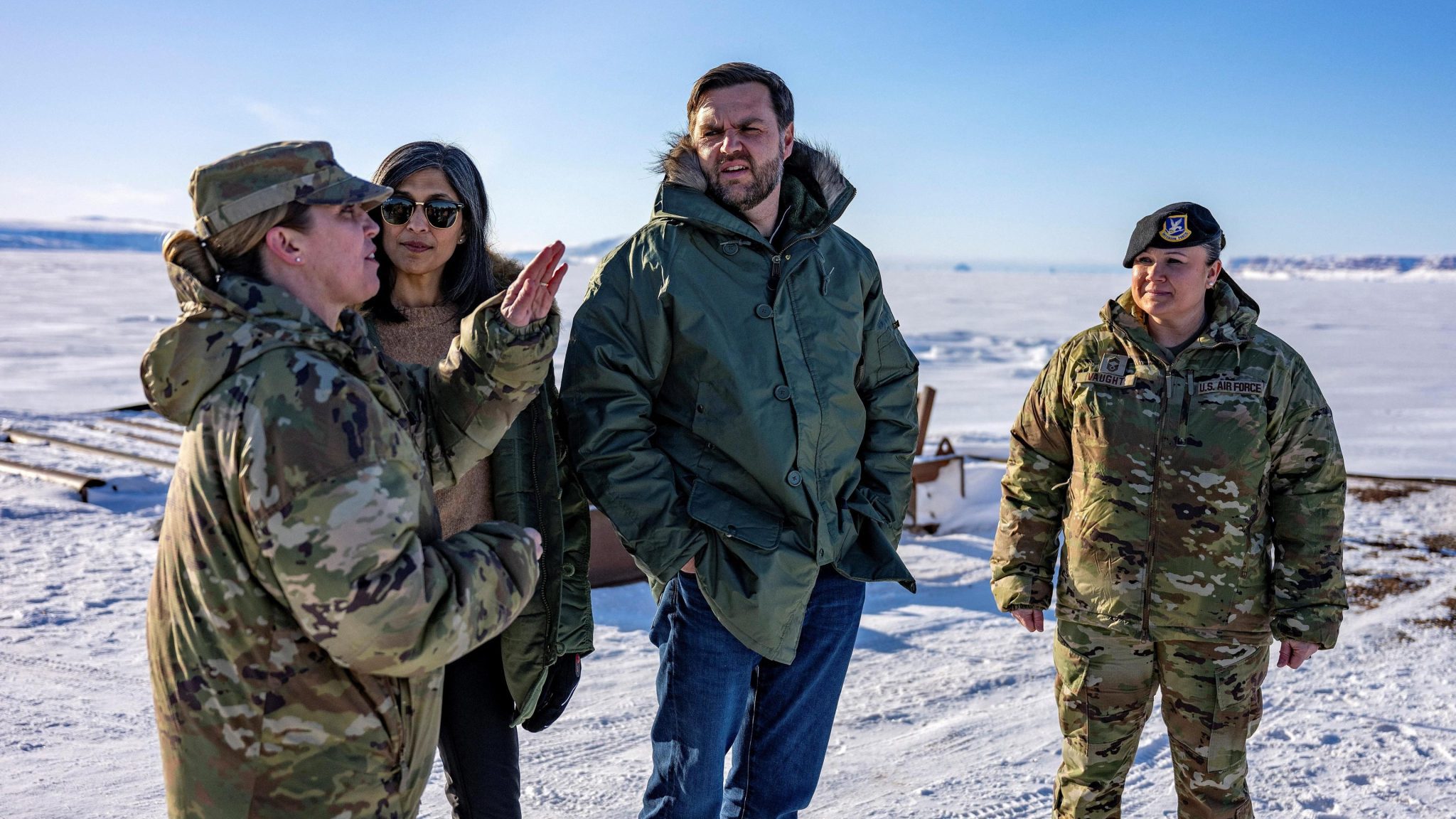
Today, Washington operates just one base: Pituffik Space Base, a critical radar installation.
The surrounding waters are equally important. The GIUK gap — between Greenland, Iceland and the UK — is a key maritime choke-point for monitoring Russian and Chinese submarines moving between the Arctic and the Atlantic.
Denmark has pledged $4bn to strengthen Greenland’s security, but the Trump administration has dismissed the move as insufficient.
Is This Really About Security?
Some analysts remain unconvinced by Trump’s security argument.
“If security was the only concern, the Pacific High North would be more sensitive for the US than Greenland,” said Ian Lesser of the German Marshall Fund. That region includes the Bering Strait, where US and Russian territory lie just kilometres apart.
Lesser believes Trump’s focus on Greenland points instead to economic security.
The island is rich in rare earths and critical minerals essential for high-tech and defence industries. Melting Arctic ice could also open lucrative new shipping routes.
All of that, Lesser argues, could be addressed through Nato cooperation and negotiated investment rights — without touching Danish or Greenlandic sovereignty.
“You Need Ownership”
Negotiation, however, may not be what President Trump has in mind.
“We’re talking about acquiring, not leasing,” Trump said this week. “You need ownership. You really need title.”
Greenland may be politically European but geographically North American — and it is closer to Washington than Copenhagen. Trump appears keen to make America “great-er” not just in power, but in size.
Most Greenlanders say they want independence from Denmark. Yet polls show around 85% reject becoming American.
Ahead of Wednesday’s meeting, Greenland’s prime minister Jens-Frederik Nielsen warned that the country faces a geopolitical crisis.
“If we have to choose between the US and Denmark here and now,” he said, “then we choose Denmark.”
A Joker in the Pack
Ultimately, much may depend on one man.
“What will happen will come down to the president,” said Sara Olvig of Greenland’s Centre for Foreign and Security Policy. “He’s very unpredictable.”
She issued a stark warning: “If the US takes Greenland by coercion, the United States will no longer be the land of the free. It will be the end of Nato and of the democratic world as we know it.”
As Washington prepares for Wednesday’s talks, Russia and China will be watching closely — almost as closely as Greenlanders themselves.
There is a lot at stake, far beyond this vast, icy island.

