


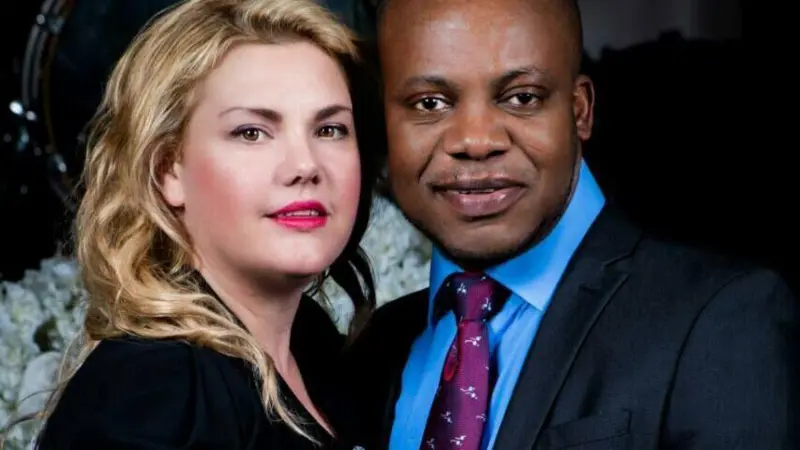
A decade after the death of Scottish woman Charmain Speirs in a hotel room in Ghana, a new BBC investigation has uncovered fresh details that are raising questions about the circumstances surrounding her final hours.
Charmain, who was 40 when she met Ghanaian preacher Eric Adusah in 2014, had been searching for stability and purpose through faith after years of personal struggles. Friends say she had become deeply involved in Pentecostal Christianity and believed she had found fulfilment when she met Adusah, described as a prominent pastor and “prophet” within his church.
“She’d just had enough of normal men… she wanted that man of God,” a friend told the BBC.
The pair met through a Christian dating site and married within months. By September 2014, Charmain had taken on a new identity within the church as the pastor’s wife — a role that friends say quickly elevated her status.
But just six months later, Charmain was found dead in a bathtub in a hotel in Ghana.
Conflicting Accounts and Missing Details
Adusah, who was the last known person to see Charmain alive, was arrested on suspicion of murder but later released due to lack of evidence. He has consistently denied any involvement in her death.
In statements to police, he said the couple had spent a normal evening together before he left the hotel after midnight to travel to Accra for an early morning meeting.
However, the BBC investigation reveals that his account omitted key details.
A hotel worker, identified as Edward, claims Adusah returned to the room that night with two men carrying a briefcase. According to him, the men spent about an hour inside before leaving with Adusah.
Crucially, Adusah did not mention these visitors to investigators.
Retired Scottish detective Allan Jones described the omission as “very strange,” noting that any individuals present at the scene should have been identified as potential witnesses.
Questions Over Alibi and Investigation
Adusah told police he had left to meet a reverend in Accra, but the BBC tracked down the individual, who did not confirm the meeting.
There is no evidence that Ghanaian investigators verified this alibi at the time.
“In a modern police investigation… that person should have been traced,” Jones said, suggesting shortcomings in the original inquiry.
The Ghana Police Service has not responded to requests for comment.
ontroversy Over Cause of Death
A post-mortem conducted by pathologist Dr Afua Abrahams found no signs of physical trauma but concluded that Charmain likely died from a heroin overdose.
However, this finding has been widely disputed.
Heroin is rare in Ghana, particularly in the area where she died, and no drug paraphernalia was found in the hotel room or among her belongings.
Family and friends strongly reject claims that Charmain used drugs or was suicidal.
“She hated anybody on drugs,” her mother, Linda Speirs, said.
A later UK toxicology analysis of Charmain’s hair also found no evidence of long-term drug use.
Allegations of Abuse and Control
The BBC documentary also features testimony from former partners of Adusah, who allege patterns of coercive and controlling behaviour.
One former partner claimed he “controlled every aspect” of her life, including her appearance, communication, and movements, describing his influence as psychological rather than physical.
Charmain’s son, Isaac, also alleged that Adusah was physically abusive.
“He called himself a prophet. What prophet would hit their wife? What prophet would lay a finger on a child?” he said.
He described witnessing violence against his mother and said she lived under strict control.
Family members also reported signs consistent with abuse, including physical injuries that Charmain allegedly attributed to her husband.
Final Days and Unanswered Questions
In the days leading up to her death, Charmain had reportedly begun questioning Adusah’s identity and behaviour.
According to a witness statement, she had discovered he used multiple names and may have had another wife in Ghana. She was said to be considering divorce and had confronted him shortly before her death.
The same witness recalled hearing an argument between the couple the night before Charmain was last seen alive.
Despite these accounts, some evidence — including a key witness statement — was not shared with Ghanaian authorities, reportedly due to concerns over the country’s use of the death penalty at the time.
A Case That Remains Unresolved
Today, Adusah is believed to be living in the United States under a different name and continues to preach.
He told the BBC that the renewed investigation has caused him “severe emotional distress” and said he had suffered “profound personal trauma” following the death of his wife and unborn child.
More than ten years on, the full circumstances of what happened in that hotel room remain unclear.
For Charmain’s family, the search for answers continues.
“I have to live the rest of my life knowing that my mum is never going to see what I do,” her son Isaac said.
The BBC’s findings have now brought renewed attention to the case, raising fresh questions about the original investigation, the evidence presented, and whether justice has truly been served.

