

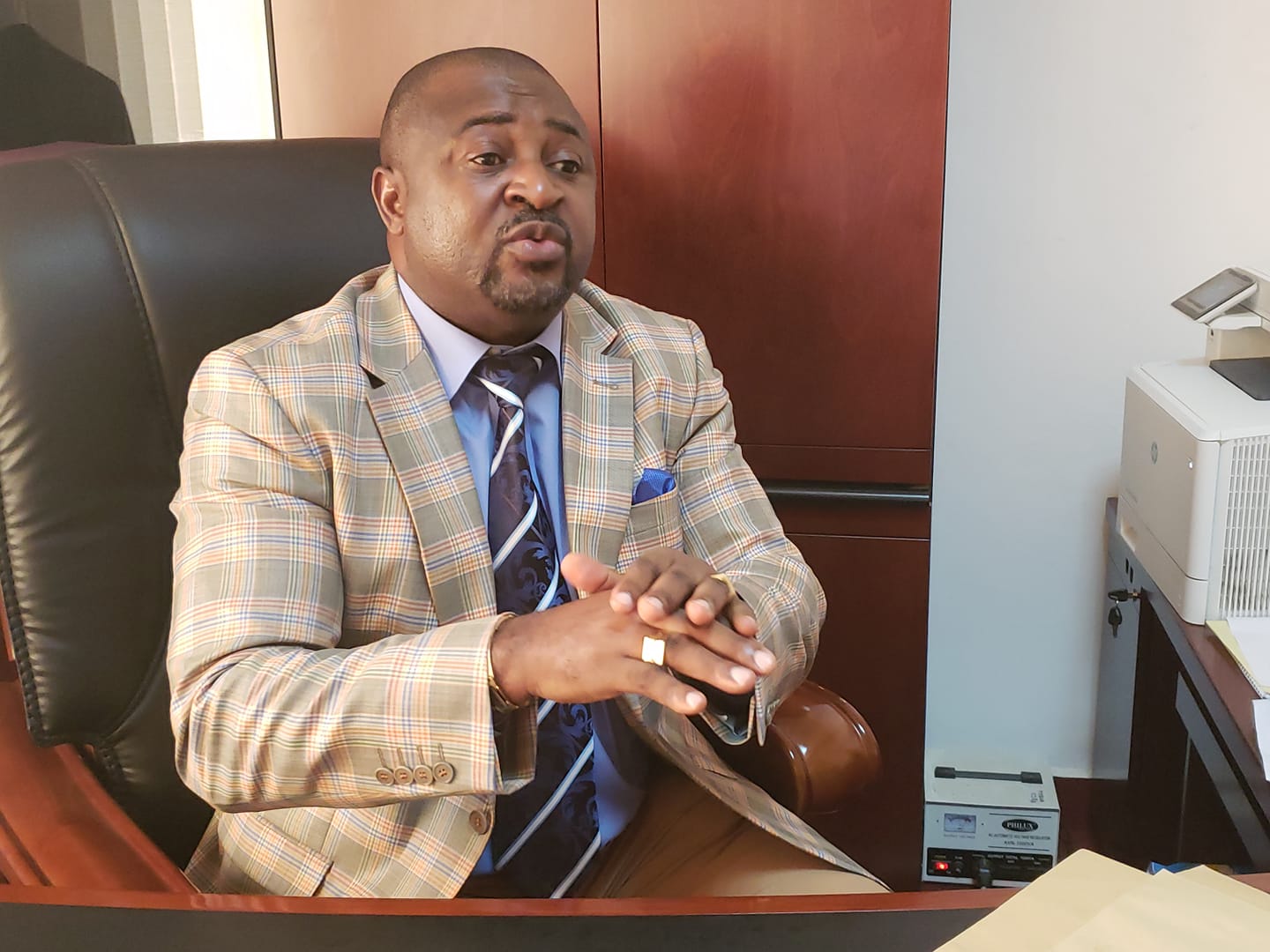
Cameroonian political analyst Dr David Makongo has challenged opposition figure Issa Tchiroma Bakary to move the national conversation beyond the familiar debate over whether Cameroon should remain a unitary state or return to federalism.
In a public message addressed directly to Tchiroma, Makongo argued that changing the structure of government would not, on its own, resolve Cameroon’s deep political, economic, linguistic and identity crises.
“Cameroon needs a new national identity, not another political label,” Makongo declared.
His intervention comes amid renewed debate over Cameroon’s form of state. Tchiroma has previously expressed support for constitutional reforms that could return the country to federalism and proposed allowing Cameroonians to decide the issue through a referendum.
Makongo, however, said the more urgent question is not whether Cameroon should be unitary or federal, but whether the country can build a political system in which all citizens feel respected, protected and represented.
“The future of Cameroon cannot be built by simply changing the structure of the state,” he said.
“The real challenge before us is not choosing between a unitary system and a federal system, but creating a nation where every Cameroonian feels equally valued, protected and represented.”
‘No system can solve the crisis by itself’
Cameroon operated as a federation following the 1961 union between the former British Southern Cameroons and the Republic of Cameroon. The federal structure was abolished following the 1972 referendum that created the United Republic of Cameroon.
Debate over federalism later resurfaced strongly during the Anglophone crisis, with advocates arguing that greater regional autonomy could address the political and administrative grievances of Cameroon’s English-speaking population.
Others have supported decentralization or the preservation of the unitary state, warning that federalism could deepen regional divisions.
Makongo said neither system should be presented as an automatic solution to the country’s problems.
“Neither a unitary system nor a federal system of government, by itself, can resolve Cameroon’s deep socio-economic and political problems,” he said.
According to him, many of Cameroon’s present political and identity tensions are rooted in historical administrative divisions that have gradually become barriers between citizens.
“Many of today’s political, legal, linguistic and identity crises stem from historical administrative divisions that have gradually evolved into barriers of mistrust and exclusion,” Makongo said.
His remarks suggest that constitutional restructuring without changes in governance, equality, accountability and public participation could simply reproduce the same problems under a different political arrangement.
Building a shared Cameroonian identity
Makongo called for the construction of a shared civic identity capable of bringing Cameroonians together without erasing the country’s cultural, linguistic and regional differences.
“Lasting national unity requires building a shared civic identity that transcends inherited colonial boundaries while recognizing, respecting and celebrating the country’s rich cultural, linguistic and regional diversity,” he said.
“Our differences should be a source of strength, not division.”
Cameroon’s population includes hundreds of ethnic and linguistic communities, alongside its official English and French heritage.
However, national debates have frequently been shaped by divisions between Anglophones and Francophones, the center and the regions, different ethnic communities and citizens who feel included in state institutions and those who believe they have been marginalized.
Makongo said these differences should not prevent Cameroonians from developing a common sense of citizenship and national belonging.
He urged political leaders to shift the debate from the narrow question of government structure towards the principles on which the country should be governed.
“The debate should therefore move beyond ‘Unitary or Federal?’ and focus instead on: ‘How do we build one Cameroon where justice, equal opportunity, accountability and national belonging are guaranteed for every citizen?’” he said.
More than constitutional reform
Makongo argued that Cameroon requires more than amendments to its Constitution.
He said the country needs a broad national transformation capable of rebuilding citizens’ trust in public institutions and replacing political and social exclusion with genuine inclusion.
“Cameroon does not merely need constitutional reform,” Makongo said. “It needs a national transformation that restores trust between the state and its people, replaces exclusion with inclusion, and inspires every citizen to believe once again in a common future.”
The political analyst said this should become the central conversation for a country searching for peace, stability and sustainable development.
“That is the conversation worthy of a nation seeking lasting peace, stability, prosperity and unity,” he said.
Cameroon’s debates about national unity have become more urgent amid the prolonged armed conflict in the North West and South West Regions, political tensions, demands for stronger decentralization and widespread frustration over governance and unequal access to opportunities.
While federalism has been proposed as one possible response, Makongo maintained that no constitutional system would succeed without justice, accountability and a shared commitment to citizenship.
‘The real problem is our national consciousness’
Makongo concluded that Cameroon’s most serious problem is not necessarily the legal arrangement through which the country is governed.
Instead, he said the deeper challenge lies in how Cameroonians understand themselves, relate to one another and view their place within the nation.
“The greatest challenge facing Cameroon is not the structure of government—it is the structure of our national consciousness,” he said.
“When we build one people with one shared destiny, every constitutional model becomes stronger. Until then, no constitutional model alone will save Cameroon.”
His message places responsibility not only on politicians and constitutional reformers, but also on institutions and citizens seeking to build a country in which linguistic, cultural and regional differences do not determine who receives justice, protection or opportunity.
For Makongo, the debate over federalism may remain important, but it should form part of a much larger national conversation about belonging, equality and the kind of Cameroon its citizens want to create.

