




Joint statement alleges that the administrator withheld an official border inquiry order, ignored attacks against Kedjom residents and favoured the Bambui leadership.
The communities of Kedjom Keku and Kedjom Ketinguh have accused Tubah Divisional Officer Massango Metougue Narcisse of administrative bias and complicity in the escalating land conflict at Abongpfen, also written Abongphen.
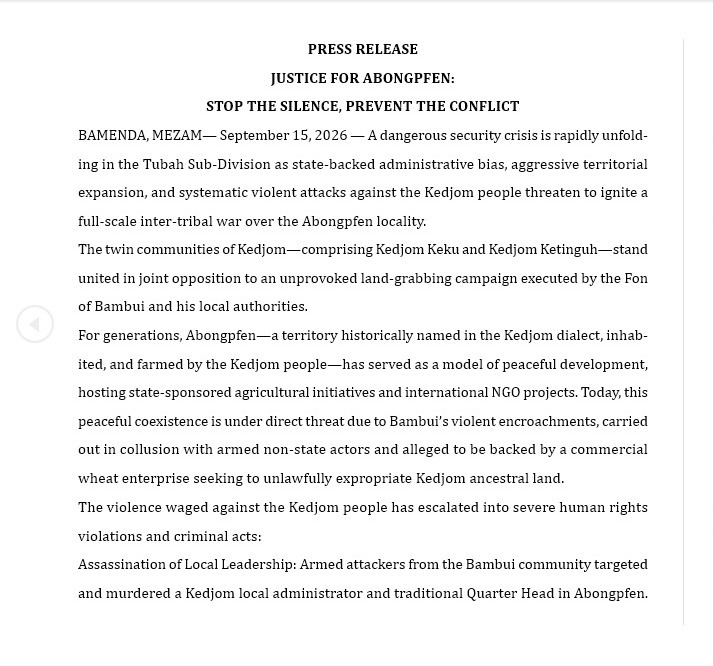
In a joint statement issued in Bamenda on September 15, the communities warned that the dispute could develop into wider intercommunal violence unless regional and national authorities intervene.
The statement also accuses the Fon of Bambui and his traditional council of pursuing what it describes as an attempt to seize Kedjom land with support from armed fighters and an unnamed commercial wheat enterprise.
Kedjom communities unite over Abongpfen
The statement was issued by the Joint Kedjom Advocacy Network on behalf of Kedjom Keku and Kedjom Ketinguh.
It says Abongpfen has been inhabited and cultivated by Kedjom people for generations. The network points to the area’s Kedjom name and its history of farming, government agricultural programmes and projects supported by international organisations as evidence of the community’s connection to the land.
It accuses the Bambui traditional authorities of attempting to expand into the area and displace Kedjom farmers for commercial purposes.
The press release did not identify the wheat company allegedly involved or provide its response to the accusation.
Group reports killing, attacks and abduction
The advocacy network says armed attackers from Bambui killed a local administrator who also served as a traditional quarter head in Abongpfen.
The statement does not name the victim or provide the date and circumstances of the killing.
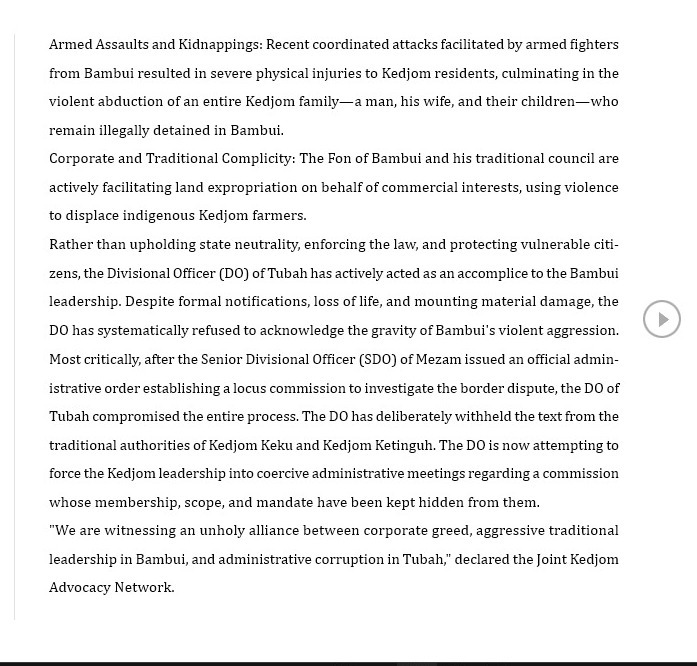
It also alleges that armed fighters working with people from Bambui carried out coordinated attacks that left several Kedjom residents seriously injured.
According to the network, a Kedjom man, his wife and their children were abducted and taken to Bambui, where they remain detained.
It is unclear whether this is the same couple previously reported to be held at the Tubah Gendarmerie Brigade or a separate family. Their identity, present location, and legal status require urgent clarification from the authorities.
DO accused of compromising border investigation
The most direct accusations in the statement concern the conduct of the Tubah Divisional Officer.
According to the network, the Senior Divisional Officer for Mezam issued an administrative order creating a locus commission to examine the disputed boundary. The Kedjom communities allege that the DO withheld the document from the traditional authorities of Kedjom Keku and Kedjom Ketinguh.
They further accuse him of attempting to force their leaders to attend meetings without disclosing the commission’s membership, mandate or scope.
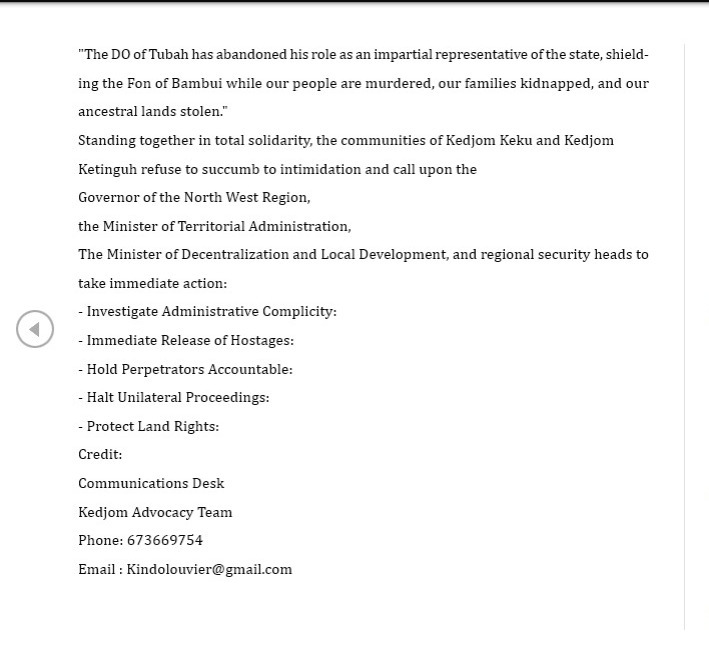
“The DO of Tubah has abandoned his role as an impartial representative of the state,” the group said.
These allegations place a direct responsibility on the DO to explain how the commission was constituted, why its establishing document was reportedly withheld and what measures he has taken to prevent further violence.
A boundary investigation cannot be credible if affected communities are denied access to its mandate or do not know who will determine their claims.
Kedjom communities demand outside intervention
The communities are asking North West Governor Adolphe Lele Lafrique, the Minister of Territorial Administration, the Minister of Decentralisation and Local Development and regional security officials to intervene.
Their demands include an investigation into alleged administrative complicity, the release of the detained family, prosecution of those responsible for the attacks and a halt to any boundary proceedings conducted without full disclosure.
They are also seeking protection for Kedjom farmers and recognition of their claimed ancestral rights over Abongpfen.
The accusations against the DO, the Fon of Bambui and other parties remain claims made by the Kedjom advocacy network. However, the reported killing, injuries and detentions require an independent investigation.
The Tubah administration must disclose the order establishing the locus commission and explain how the boundary process is being conducted. Silence from those responsible for maintaining public order risks deepening distrust and exposing both communities to further violence.