

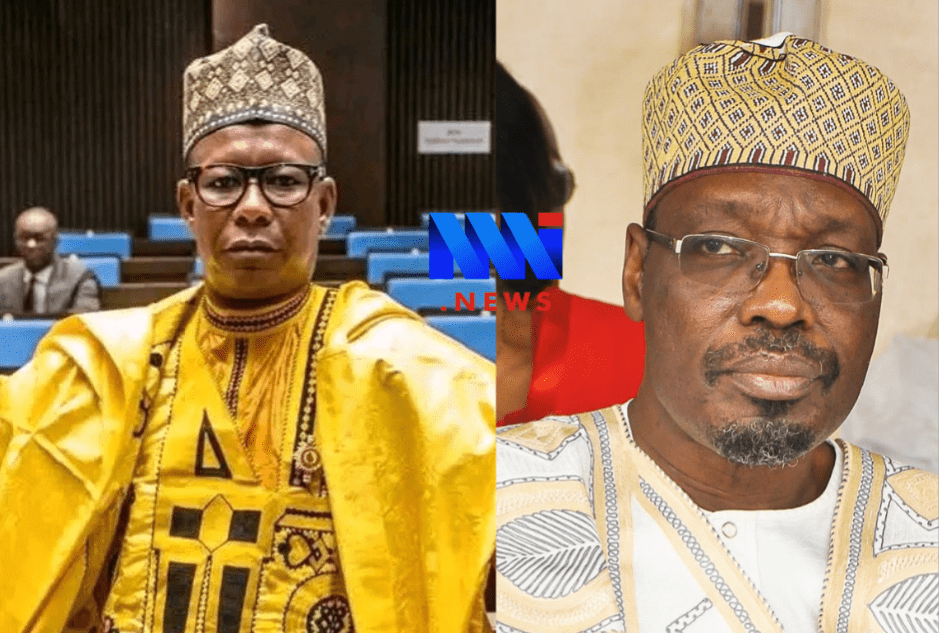
A new political label has emerged on the national stage: the Rassemblement Populaire (RP), a party recently founded by Honorable Salmana Amadou Ali, who resigned from Issa Tchiroma Bakary’s FSNC party recently.
Officially presented as a renewal project, this new party appears to follow a well-known pattern of strategic repositioning ahead of upcoming presidential election.
Behind the rhetoric of connecting with communities in the Grand North lie more personal ambitions.
The lawmaker, a former influential figure within Issa Tchiroma Bakary’s FSNC, now seems bent on carving out his own place in the political spotlight, distancing himself from his former political mentors.
Like Yerima Dewa—another defector from the same party who also created his own political structure—Salmana Amadou Ali appears driven more by his political future than by the everyday concerns of his constituents.
This multiplication of parties, far from signaling genuine pluralism or a desire to better represent citizens, instead resembles a tactical dispersal of political forces in the Grand North.
In the background, the real objective of this fragmentation may well be to act as a relay for President Paul Biya’s bid in the upcoming presidential election—splintering local opposition while mobilizing an electorate loyal to the ruling regime.
It is an old strategy: multiplying faces without ever challenging the core of power.
Meanwhile, the structural problems facing people in the Grand North—poverty, unemployment, and access to basic social services—remain unaddressed in any concrete way.
In this context, the launch of the RP raises an essential question: is this a genuine societal project or simply a political bargaining tool within a tightly controlled system?
Only time and actions will, perhaps, reveal the true intentions.

