


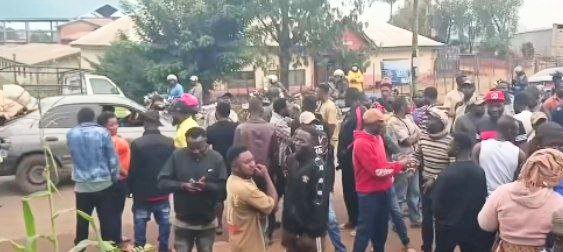
Transporters and commercial bike riders plying the Bamenda–Bali highway blocked the road, disrupting traffic and operations at security checkpoints on Thursday, protesting what they described as extortion by security officers.
The drivers say they were forced to pay bribes at multiple checkpoints every day, with no justification for the numerous controls placed on a stretch of less than five kilometers between Azire New Church and Akaka Junction.
“We pay 1,000 francs twice a day in the morning and in the evening. They tell us the control has changed, so we must pay again,” one frustrated driver told MMI, pleading for anonymity.
“If just 50 drivers ply this road, it means the two control posts collect at least 2.4 million francs CFA a month.”
Musi David, president of the Bali Drivers Labour Union, described the situation as exploitative and unlawful.
“We know the presence of security is meant to protect us, but they have instead created a roadside secretariat where drivers are forced to pay daily,” Musi said.
“We think extorting us is not the mission they were assigned.”
According to Musi, the union has previously held meetings with top security and military officials to raise concerns over illegal roadblocks.
“That’s why we came out today to make it clear we’re no longer content with this situation,” he added.
A taxi driver lamented the abnormal number of checkpoints, saying: “How can you explain two controls in less than 5km? It’s only in Bamenda that this happens.”
But the issue stretches beyond just the Bamenda–Bali corridor.
On the Bamenda–Bambili stretch, a distance of under 25 kilometers drivers reportedly pass through at least six checkpoints, spending up to 6,500 CFA francs daily.
Soaring Costs, Crumbling Roads
Further North, between Bamenda and Wum, the situation is reportedly worse for commercial motorbike riders.
They claim they spend up to 9,500 CFA francs per day on checkpoint “settlements.” They estimate that the checkpoint could be making over 6.8 million francs CFA monthly in illegal collections.
“The roads are terrible. What used to be a 2,500-franc journey from Bamenda to Wum now costs up to 15,000 and sometimes even 20,000,” said Kum, a native of Wum.
“And one bike must carry two people to make the trip profitable.”
Ebua, a bike rider, added: “We have to settle the checkpoints and still visit a mechanic after every trip because the roads destroy our bikes.”
The rainy season has only worsened the region’s road conditions, rendering some routes inaccessible to vehicles.
Riders and drivers say they are bearing the brunt of poor infrastructure and corrupt practices, with little or no support from local authorities.
Authorities Urge Compliance Amid Growing Frustration
Security officials have consistently insisted that drivers and riders should comply with road safety rules and carry up-to-date documentation.
But according to the transporters, compliance does not shield anyone from extortion.
“Whether you have all your papers or not, you must pay,” said another driver, summing up the frustrations that have led to growing unrest in the region’s transport sector.

