


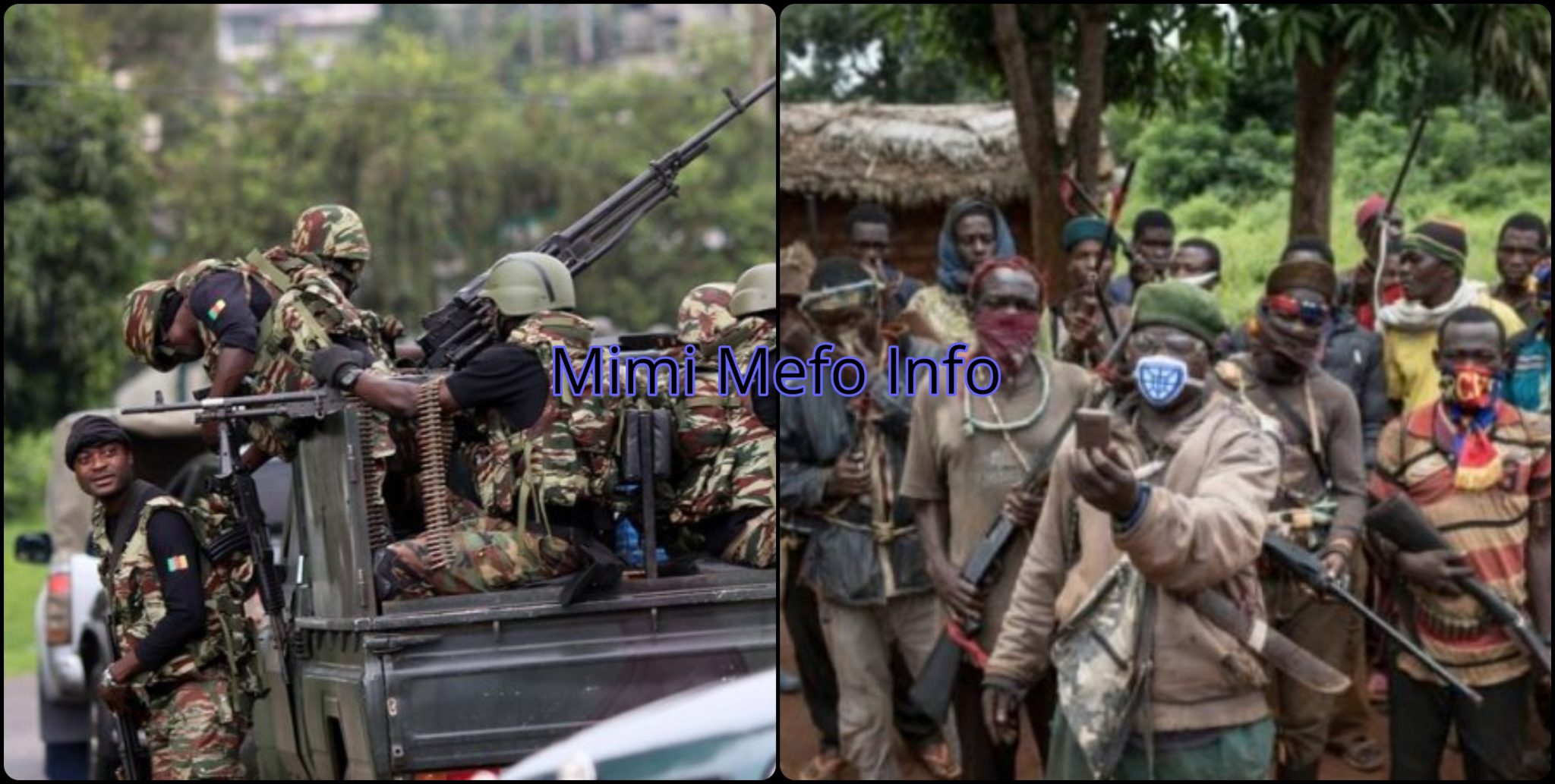
Just a week after armed separatists stormed a Bamenda residence looking for Eunice Chifu, Cameroonian government soldiers launched a raid on the same compound, this time hunting her down based on opposite allegations: that she was romantically involved with a separatist fighter.
Witnesses in Meta Quarters, a densely populated neighbourhood in the Northwest region’s capital, say troops arrived at the residence unannounced on the morning of April 10, wielding assault rifles and surrounding the property.
“They kicked down the back gate and asked everybody to lie on the ground,” said a tenant who narrowly escaped the chaos. “They were shouting, ‘Where is the girl who dates Amba boys?’”
The operation lasted about 30 minutes. While no arrests were made, neighbours said soldiers ransacked rooms, interrogated occupants, and threatened to return if Eunice was found to be hiding there.
“They said she’s working with Amba, that she cooks for them and gives them updates about army movements,” said a young man who lives in a neighbouring apartment. “But last week, Amba boys came here saying she works with the army. Who should we believe?”
Double Accused, Doubly Unsafe
For Eunice Chifu, the young woman at the centre of this widening crisis, the stakes couldn’t be higher. In the span of a week, she has become a wanted person on both sides of Cameroon’s simmering Anglophone conflict, first accused by separatists of having ties to the military and now by the military of consorting with separatists.
Her whereabouts remain unknown.
This contradictory targeting is emblematic of the complex and often arbitrary dynamics of the Anglophone crisis, where association alone can be a death sentence, and civilians, particularly women, are left defenceless.
“She is trapped in a deadly paradox,” said a local civil society leader. “Whether or not she ever spoke to a soldier or a fighter, both sides believe she belongs to the other. In a war like this, perception kills.”
Collateral in a War Without Lines
The attack underscores a grim reality: there is no neutral ground in the conflict between government forces and Ambazonian separatists. Residents are frequently forced to prove their innocence — a dangerous proposition in a context where due process doesn’t exist, and accusations can spread via rumor, revenge, or mistaken identity.
“It’s not about what you did. It’s about what someone says you did,” said a woman in her 60s who lives in the same compound. “They can come for you at any time. Eunice is not the first, and she won’t be the last.”
In the last two years alone, reports have surfaced of dozens of women harassed, abducted, or even executed over claims of associating with “the enemy.” As recently as 2023, over 30 women in Babanki were kidnapped by separatists for protesting illegal taxes. Many were beaten, some reportedly raped. The military, meanwhile, has also been accused of sexual violence and summary executions in several villages.
The Echoes of Impunity
Despite repeated appeals from rights groups, there remains no functioning system of protection or recourse for civilians caught in the crossfire. Local authorities often ignore complaints, and separatists operate in the shadows, beyond the purview of formal justice.
A representative of a women’s advocacy group based in Bamenda said, “This is what happens when a conflict festers for nearly a decade.” She added “People like Eunice are consumed by a war they never joined.”
As of this report, Eunice Chifu has not made contact with her family, and her fate remains unknown.
Living Between Fear and Firepower
Residents of Meta Quarters now live in heightened fear, not knowing who will arrive next—fighters or soldiers—or what questions they will ask.
“She’s gone. We don’t know where she is. We don’t even know if she’s alive,” said a tearful woman who identified herself as a family friend. “But if they keep coming, they might take one of us next.”
Until then, the house that once sheltered her remains a battleground of suspicion — and a grim reminder that in Cameroon’s Anglophone crisis, civilians are both witnesses and victims of a war with no rules.

