


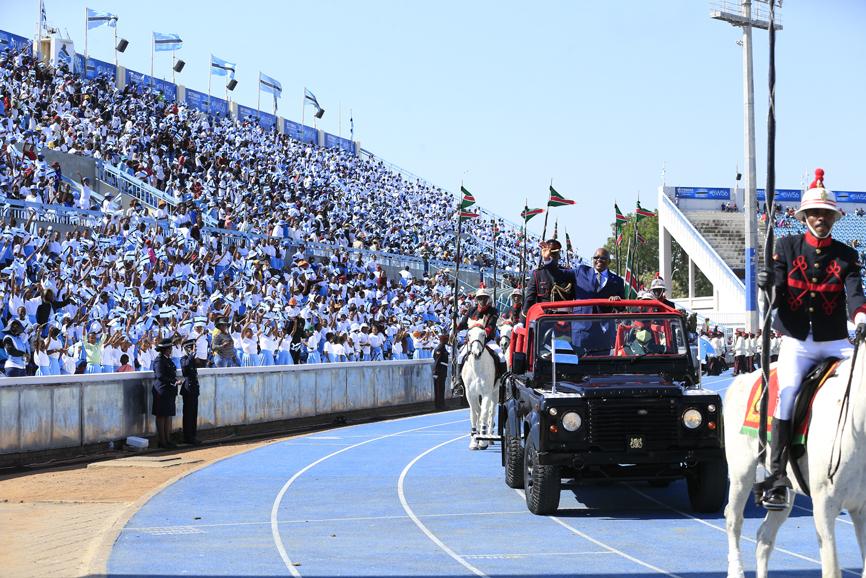
Botswana is marking 60 years of independence today, September 30, celebrating one of Africa’s most remarkable economic transformations — from a country with just 12 kilometres of paved roads and 22 university graduates to an upper-middle-income nation.
When Botswana gained independence from Britain on September 30, 1966, the odds were hardly in its favour.
The former Bechuanaland Protectorate was one of the poorest countries in the world. Across a territory roughly the size of France, there were only about 12 kilometres of paved roads.
Even more striking was its shortage of educated professionals. At independence, Botswana had just 22 citizens who had graduated from university and around 100 secondary-school graduates.
Sixty years later, the country is almost unrecognisable by those measures.
Botswana has developed thousands of kilometres of paved roads, greatly expanded access to education and health services, and risen into the ranks of upper-middle-income economies.
As the country celebrates its Diamond Jubilee today, its journey offers one of the most dramatic before-and-after stories of post-independence Africa.
Diamonds discovered one year after independence
Botswana’s fortunes began to change shortly after independence.
In 1967, major diamond deposits were discovered at Orapa, setting the stage for an industry that would eventually become the backbone of the economy.
Diamonds alone, however, do not explain Botswana’s rise.
Successive governments used substantial mineral revenues to finance roads, schools, hospitals and other public services while maintaining relatively stable institutions and long-term development planning.
For decades, the result was extraordinary economic growth.
World Bank research has described Botswana as one of the world’s fastest-growing economies during the decades following independence. Real income per person increased several times over as the country moved away from an economy dominated by cattle and agriculture towards mining, services and government-led development.
The country eventually reached upper-middle-income status.
From one ruling party to historic transfer of power
Botswana also followed a political path that distinguished it from many African states that became independent during the same period.
It held regular multiparty elections for decades without a military takeover.
For 58 years, however, every government was led by the Botswana Democratic Party, BDP, which had governed since independence.
That changed dramatically in October 2024.
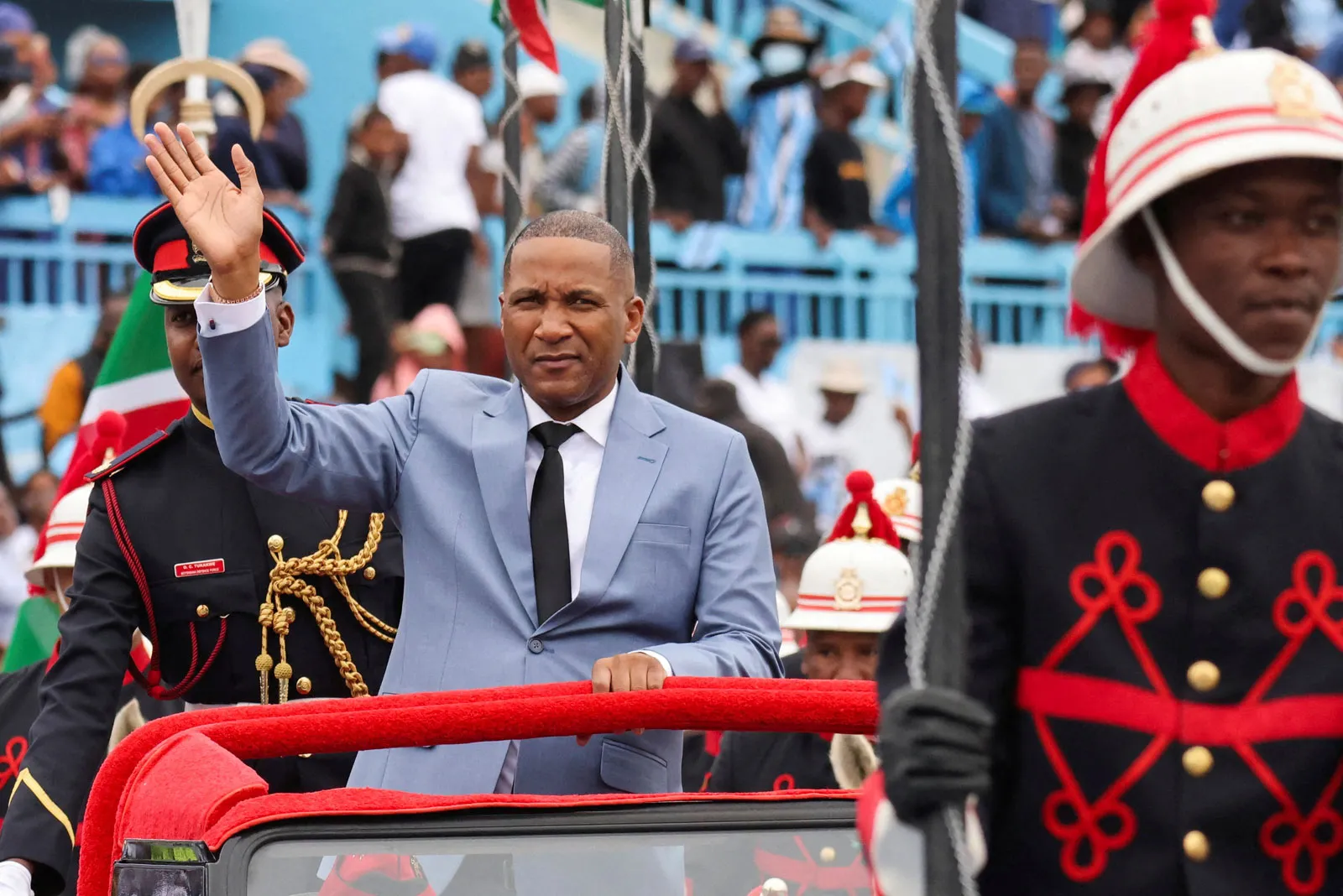
The opposition Umbrella for Democratic Change won the general election, bringing Duma Boko to the presidency and ending nearly six decades of uninterrupted BDP rule.
The new administration assumed office in November 2024, marking Botswana’s first transfer of power between political parties since independence.
Botswana’s diamond success now faces a major test
The resource that helped finance Botswana’s transformation has also become one of its biggest economic vulnerabilities.
The country remains heavily dependent on diamonds for export earnings and government revenue.
Demand for natural diamonds has weakened in recent years, while laboratory-grown stones have increased competition in the global jewellery market.
The effects have been serious.
Botswana’s economy contracted by 2.8% in 2024 and a further 0.7% in 2025, according to the World Bank, as weaker diamond revenues placed pressure on public finances.
Unemployment also remains high, while efforts to build stronger industries outside mining have progressed more slowly than governments had hoped.
The World Bank says the country now needs faster economic diversification, stronger private-sector growth and investment in skills to create jobs and reduce its exposure to changes in the global diamond market.
Early signs of recovery emerged in 2026, but the challenge facing Botswana as it begins its seventh decade is clear: building another economic model capable of delivering growth beyond diamonds.
Botswana celebrates 60 years
Botswana’s 60th Independence anniversary is being celebrated under the theme “Building Resilience, Driving Prosperity.”
This year’s events mark a departure from the country’s traditional Independence Day celebrations.
Instead of concentrating the main programme at the National Stadium, activities are centred around Gaborone’s historic Main Mall and communities across the country.
The capital is also hosting Botswana’s first Independence Day carnival, with dancers, musicians, actors, fashion designers and other performers taking part in processions through Gaborone.
Celebrations are expected to continue into the night with music and cultural performances.
For many Batswana, however, the anniversary is also an opportunity to look back at numbers that show just how far the country has travelled.
In 1966, Botswana had 12 kilometres of paved roads, 22 university graduates and about 100 secondary-school graduates.
Its first 60 years transformed those circumstances beyond recognition.
The question facing Botswana at 60 is whether the country can now reproduce that progress in a new era, when diamonds may no longer be enough to carry the economy.
#MMINews

