



Armed separatist leaders in Cameroon’s Anglophone regions have reportedly agreed to suspend an ongoing lockdown to enable residents to participate in the upcoming elections.
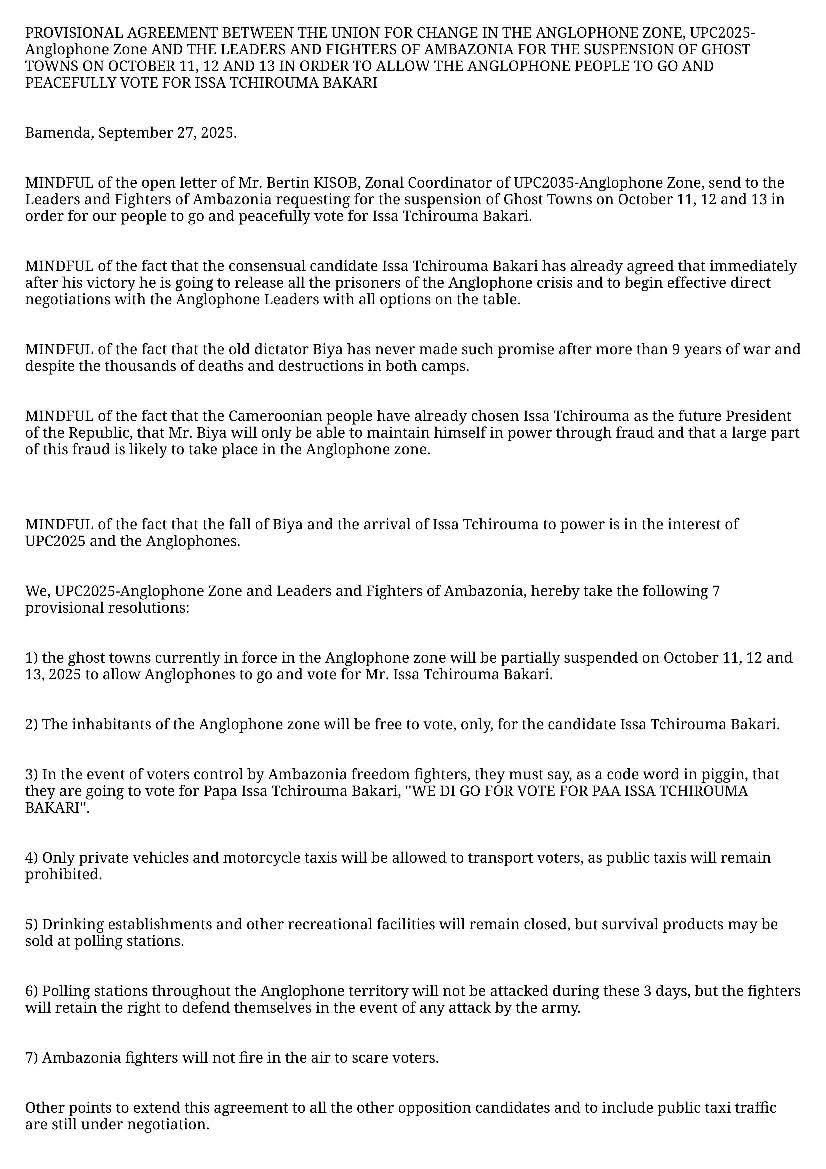
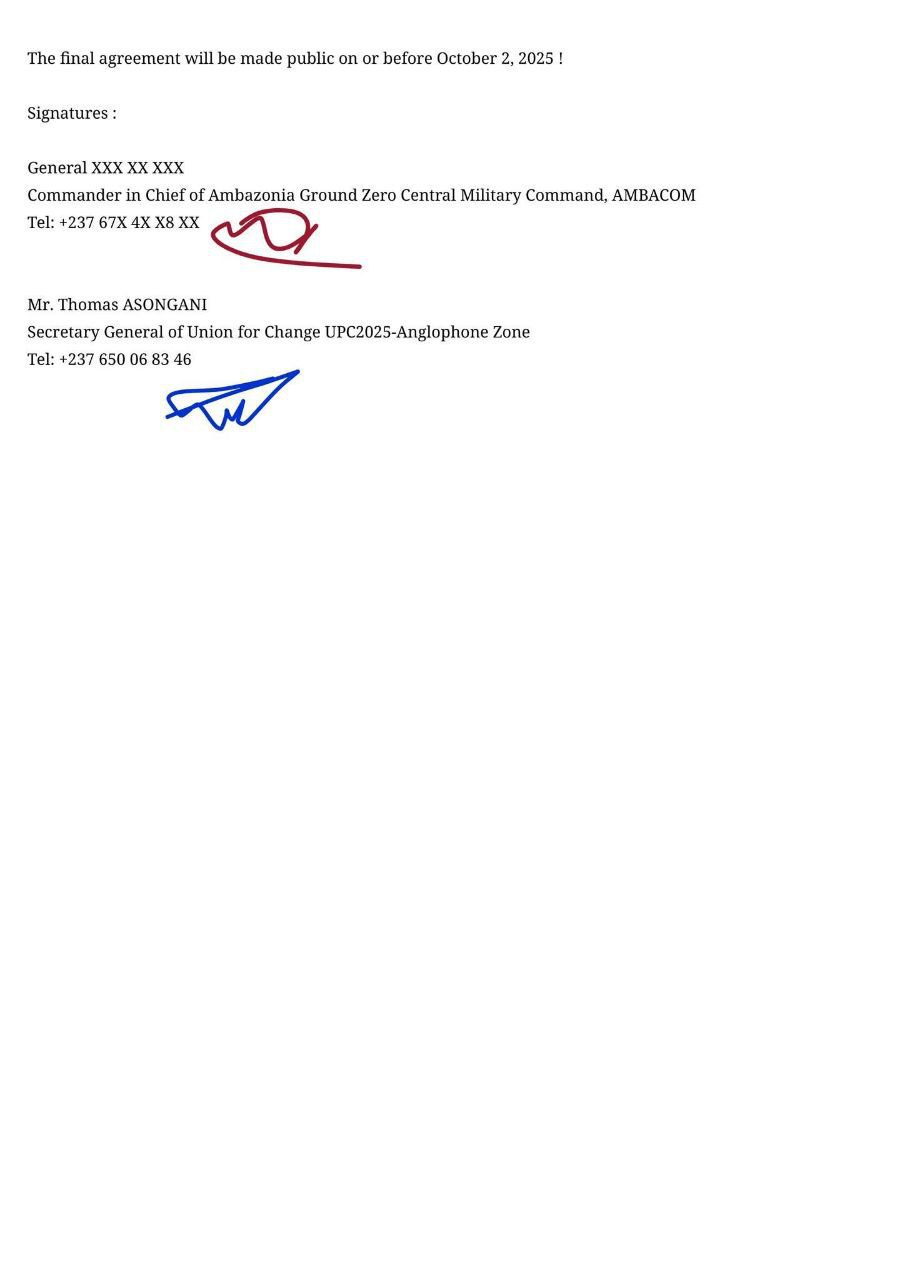
According to a document circulating online and attributed to the Union for Change in the Anglophone regions, fighters and leaders from the Northwest and Southwest have called for a pause in the lockdown from October 11 to 13, 2025. The statement, dated September 27 and signed in Bamenda, allegedly bears the names of General XXX XX XXX, Commander in Chief of Ambazonia Ground Zero Central Military Command (AMBACOM), and Thomas Asongani, Secretary General of Union for Change UPC2025-Anglophone Zone.
However, MMI has not been able to independently verify the authenticity of the document. This lack of authentication is not unusual, as separatist factions often operate under strict secrecy and anonymity, making verification of their communiqués difficult.
What the Document Says
The letter claims that the lockdown will be temporarily lifted to give Anglophones an opportunity to vote. It specifically names Beltin Kisob, a detained leader currently held at Kondengui prison, as a figurehead urging participation in the elections.
Key resolutions outlined in the document include:
- Suspension of ghost towns in the Anglophone regions on October 11, 12, and 13.
- A guarantee that polling stations will not be attacked during this period.
- An instruction that fighters will not fire into the air to intimidate voters.
Relief for Local Residents
For many residents in the conflict-hit Northwest and Southwest, the suspension—if implemented—could provide much-needed relief. Lockdowns, often enforced through threats and violence, have kept thousands indoors for extended periods. The prospect of safely casting a ballot offers hope for civic participation amid the ongoing crisis.
Context of the Crisis
Since 2017, Cameroon’s Anglophone regions have been gripped by a separatist conflict that has displaced hundreds of thousands and claimed thousands of lives. Separatist fighters frequently impose lockdowns, known locally as ghost towns, to enforce control and disrupt government activity.
While the document signals a rare softening of separatist restrictions around election day, the lack of independent verification raises uncertainty about its enforceability and the extent of compliance among the various armed groups.

