



By Marie N Carnu
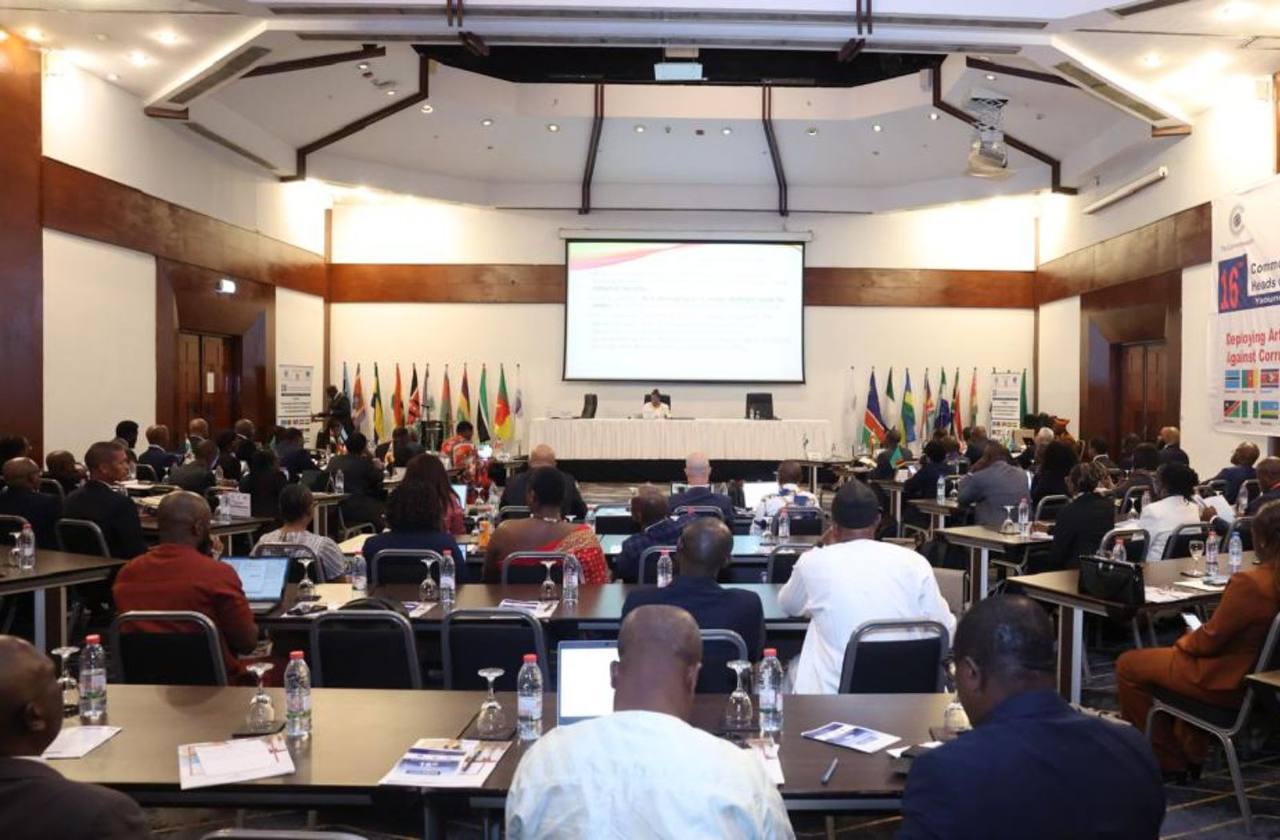
More than 200 anti-corruption leaders from across Africa have gathered in Yaounde to strengthen collaboration and explore the use of Artificial Intelligence in the fight against corruption, at the 16th Commonwealth Regional Conference of Heads of Anti-Corruption in Africa.
The event began on May 4 and will end on May 8, 2026, under the theme, “Deploying Artificial Intelligence in the Fight Against Corruption in Commonwealth Africa.”
African anti-corruption leaders presented innovations and strategies used in combating corruption in their countries.
The conference, organized by Cameroon’s National Anti-Corruption Commission (CONAC) in collaboration with the Commonwealth Secretariat, has over 200 participants, including delegates from 20 Commonwealth African countries and 25 anti-corruption agencies.
The opening ceremony was presided over by Cameroon’s Minister Delegate at the Presidency in charge of the Supreme State Audit, Mbah Acha Rose Fomundam, representing President Paul Biya.
The conference focuses on strengthening collaboration among African anti-corruption agencies, sharing innovative anti-corruption strategies, and exploring how Artificial Intelligence can be used to improve transparency, accountability, fraud detection, and governance systems across Commonwealth Africa.
Presenting the facts and figures on corruption during day three of the event, the Head of Division in Charge of Prevention and Communication at CONAC, Irene Morikang Tche, outlined the numerous initiatives and successes recorded by Cameroon in the fight.
He disclosed that in 2024 alone, his commission received 10,520 reports of corrupt practices. The financial damage to the Cameroonian state was officially estimated at 4,061,806,711 CFA francs.
The Chairman of the anti-corruption commission, Dr Dieudonne Massi Gams, said, “Cameroon has high expectations from this conference. We hope the outcome will be innovative and practical solutions to enhance our capacity to fight corruption, thereby ensuring our country’s development and the well-being of our people.”
Tanzania’s Deputy Director General of Prevention and Combating of Corruption Bureau (PCCB), Neema Mwakalyelye, shared her country’s experience in the fight against corruption.
She said public systems are being used as case studies to identify corruption loopholes and also create awareness in fostering development.
“Anti-corruption is the heart of our president’s agenda and it has been since independence,” she said.
She equally mentioned that, over the years, they have been studying public systems to identify corruption holes and also create public awareness to foster the participation of the public against corruption, and investigate once they are sure they have enough evidence, on the approval of the director of public prosecution, and that way they have been able to curb corruption.
She further mentioned that unity, collaboration, and partnership is key among African states to ensure that culprits do not have a hole in their country as a safe haven for them.
In Tanzania, they are going electronic in terms of public service delivery.
As a result, most corruption offenses are also conducted through electronic systems, and they have a lot of data from these systems and need a lot of capabilities to be able to dig out evidence and prevent corruption from happening.
“The primary responsibility in the fight against corruption is political leadership.
Accordingly, “We need political commitment in order to succeed in every endeavor in the fight against corruption,” said the Director General of the Anti-Corruption Commission of Namibia, Paul Noa, as he presented the model and challenges of the fight against corruption in his country.

