



By A.J.
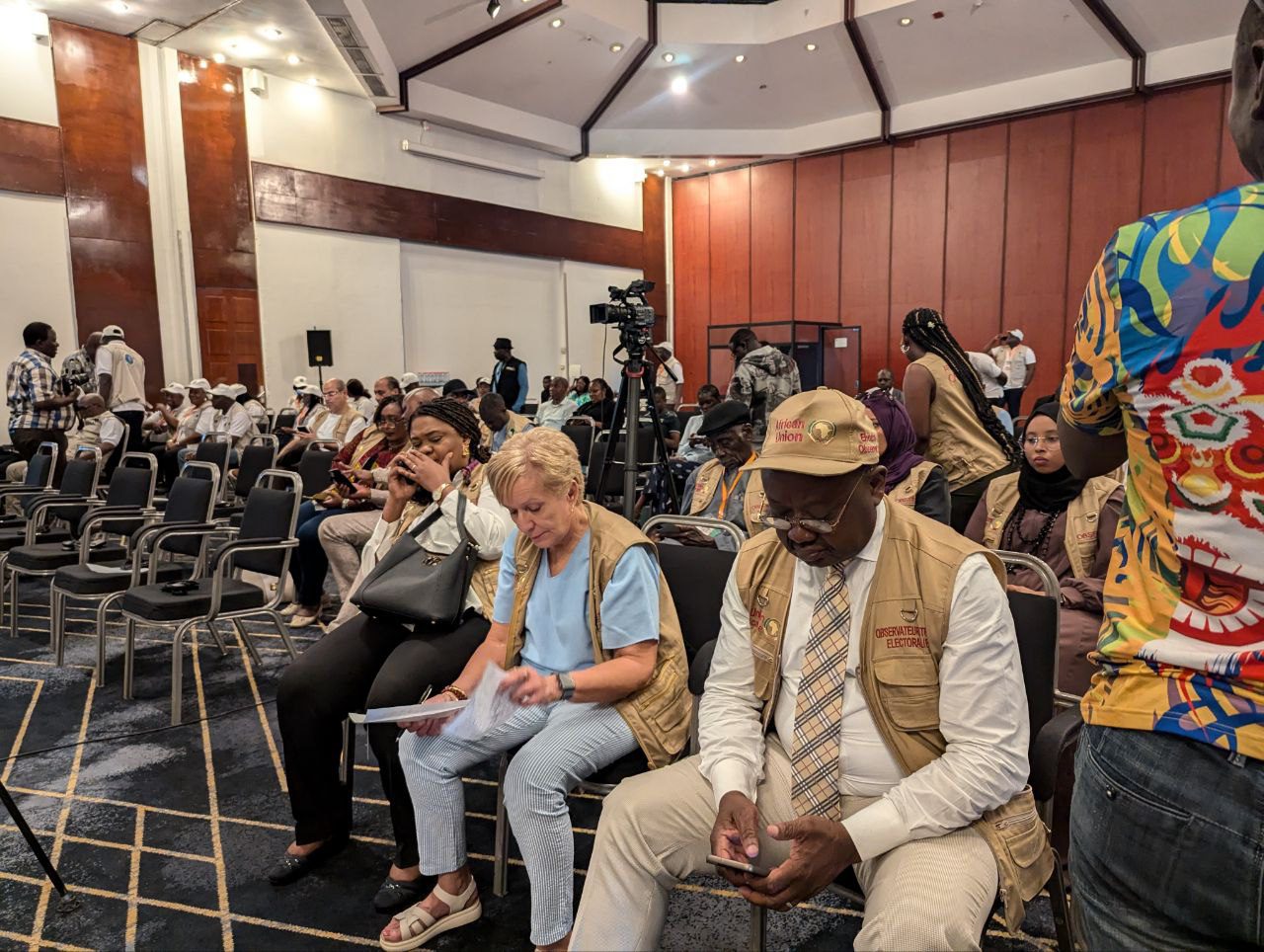
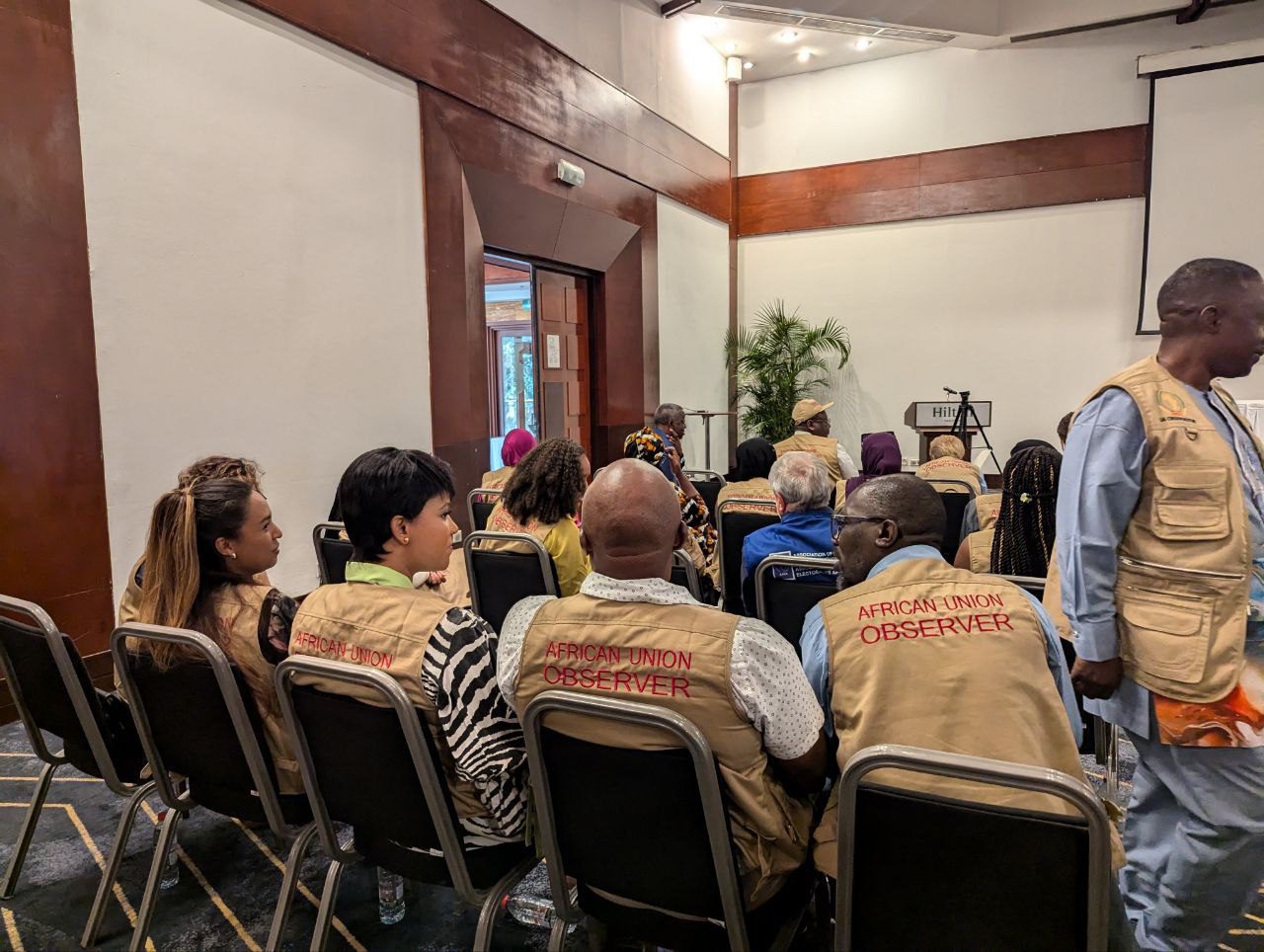
The African Union (AU) and the Economic Community of Central African States (ECCAS) Elections observation missions have hailed Cameroon’s 2025 presidential election process as peaceful, orderly, and consistent with international democratic standards.
Both observer missions shared their findings in a joint report presented at a press conference on October 14 in Yaounde, after monitoring voting activities across the country.
The joint mission, made up of 17 teams of observers, was deployed to cover 228 polling stations covering all 10 regions of Cameroon.
According to their assessment, the election “started and ended in a calm and serene atmosphere,” despite security challenges in certain areas, particularly in the conflict-hit North West and South West regions.
The observers commended the national elections management body, ELECAM, for what they described as a “consistent and diligent” conduct of the electoral process.
They also praised the forces of law and order for maintaining peace and order before, during, and after the polls, noting that the general environment was conducive for citizens to exercise their civic duty.
The report further acknowledged the professionalism of electoral officials and the respect for voting procedures at polling stations observed.
However, the missions admitted to observing a “low voter turnout” in many polling stations — a detail that contrasts sharply with the government’s portrayal of a highly participatory election.
In their recommendations, the AU and ECCAS teams proposed the introduction of a single ballot system in future elections, arguing that it would ease logistical burdens, reduce material costs, and enhance efficiency.
They also called on all political stakeholders to “safeguard peace” and channel any electoral grievances through the country’s legal framework.
These diplomatic commandments however, are in sharp contrast to media reports on the process.
Across social media and within opposition circles, there have been numerous claims of “massive irregularities” and “state-engineered fraud.”
Numerous reports and viral videos circulating online show alleged ballot stuffing, voter intimidation, and altered tallies in several constituencies.
The observers’ failure to directly address these allegations could undermine the credibility of their findings and fuels public distrust in both the electoral system and the international bodies tasked with monitoring it.
The AU and ECCAS report fits a familiar pattern — one where international observers prioritize “stability” over “accountability.”
Observers have a track record of commending the calmness of the process while ignoring the substance of the vote, the manipulation, the lack of transparency, and the institutional bias.
As tensions simmer in the aftermath of the vote, the observers’ call for peace and legal recourse may prove difficult to uphold in an environment where public confidence in the judiciary and electoral institutions remains low.
For now, the AU and ECCAS have declared Cameroon’s electoral process a “resounding success.”
But on the streets and online, the narrative is very different, one of frustration, and disillusionment.

