



In a move that has drawn mixed reactions across Bamenda, City Mayor Paul Achombong ordered the washing of the city’s Commercial Avenue with water, an exercise he says is aimed at restoring cleanliness ahead of the anticipated visit of Pope Leo XIV.
On Monday, March 16, personnel of the Army Rescue Unit were seen spraying water on Commercial Avenue, scrubbing sections of the tarred road in what authorities described as a joint clean-up operation with the city council.
Speaking to journalists, Senior Warrant Officer Taku Paul, Chief of the Center Army Rescue Unit in Bamenda justified the action, noting that the avenue had become visibly dirty in recent days and required urgent intervention.
Mayor Achombong, in his own remarks, was emphatic: “We will clean everything… garbage from Commercial Avenue,” adding that the initiative was inspired by the Pope’s visit to Cameroon.
However, the optics of the exercise have sparked public criticism and raised deeper governance concerns. Many residents question the logic of deploying scarce resources particularly water to wash tarred streets at a time when seasonal rains already provide a natural cleaning effect.
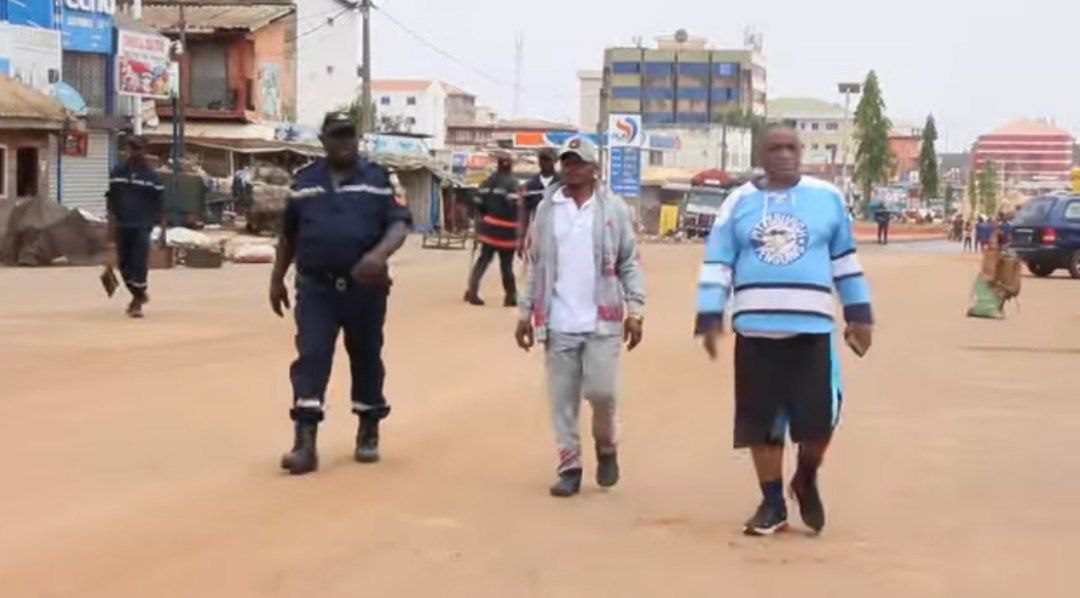
Others argue that the action reflects a pattern of reactive governance, where cosmetic interventions are prioritized over sustainable urban sanitation strategies.
Critics point out that Bamenda continues to struggle with systemic waste management challenges, including irregular garbage collection, poorly maintained dump sites, and inadequate drainage systems.
In this context, the decision to visibly “wash” the city’s most prominent street is seen by some as symbolic rather than substantive, an attempt to project order in a limited, highly visible space while broader sanitation issues remain unresolved.
The Mayor’s reference to the Pope’s visit has further fueled debate, with some residents interpreting the move as an effort to impress external observers rather than address the everyday realities faced by citizens.
This perception aligns closely with the biblical notion of “eye service”, a term drawn from passages such as Ephesians 6:6, which warns against actions performed only to please others when they are watching, rather than from a place of genuine responsibility or integrity.
In this light, the clean-up operation on Commercial Avenue risks being viewed not as a sincere public health initiative, but as a performative act, one designed for visibility rather than impact.
The involvement of the military in what is fundamentally a municipal sanitation task has also raised eyebrows, with some questioning whether such resources could be better deployed elsewhere.
Ultimately, the episode highlights a broader tension in urban governance: the balance between symbolism and substance.
While clean streets are undeniably important, residents say what Bamenda needs is not episodic washing of tar, but a consistent, well-funded waste management system that addresses sanitation challenges across all neighborhoods not just in areas likely to be seen by dignitaries.

