


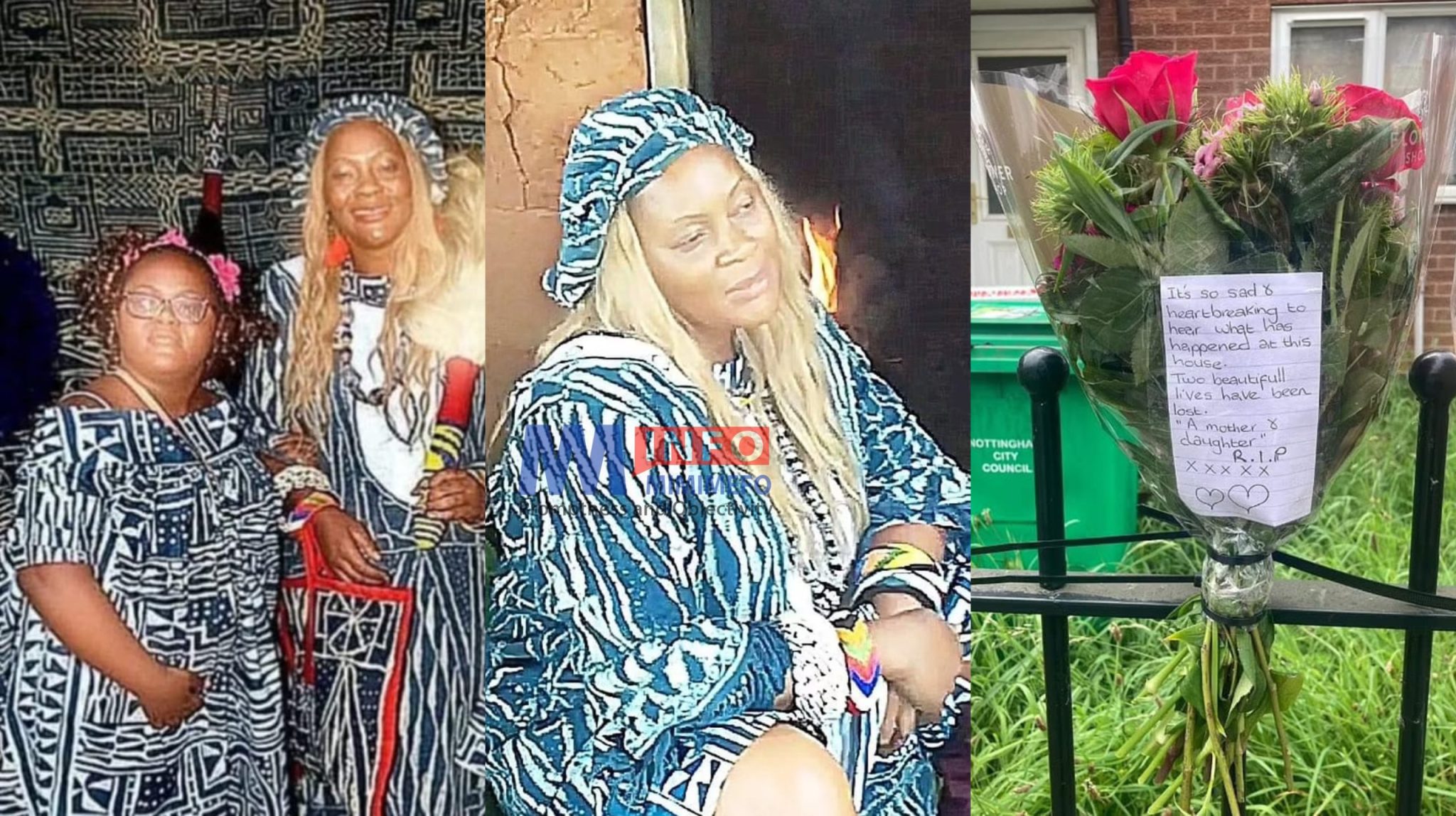
Nottingham, UK — A Cameroonian mother whose desperate 999 call went unanswered was found dead alongside her disabled teenage daughter in their Nottingham home months later, an inquest has heard.
On 21 May 2024, neighbours raised concerns, leading to the discovery of Alphonsine Djiako Leuga, 47, and her 18-year-old daughter, Loraine Choulla, who had Down’s syndrome and learning disabilities, in their Radford home. Authorities believe their bodies lay undiscovered for “weeks or months.”
The harrowing details of their final days emerged at an inquest at Nottingham Coroner’s Court, led by Assistant Coroner Amanda Bewley. The proceedings are expected to continue over five days.
“I Feel Cold and I Can’t Move”
The inquest heard that Alphonsine called 999 on 2 February pleading for help, just days after she had been discharged from hospital with a respiratory infection and severe anaemia.
“I feel cold and I can’t move,” she told the emergency services call handler. Despite clearly asking for an ambulance and giving her address, she received no medical assistance.
“Would you send an ambulance? Please come, please,” were her final words before the call ended.
Susan Jevons, paramedic and head of the coroners service at East Midlands Ambulance Service (EMAS), stated that the call was mistakenly treated as abandoned. “The ambulance didn’t go to the address because the emergency medical advisor, thinking it was an abandoned call, closed the call down,” she said.
She admitted this “should never have happened,” noting that responders had Alphonsine’s address, telephone number, and a clear description of her symptoms.
An internal investigation by EMAS concluded that there had been a “missed opportunity” to dispatch an ambulance. “I apologise on behalf of EMAS for all of the errors,” Mrs Jevons said.
Hospital Discharge and Silence
On 26 January, Nottingham’s City Hospital admitted Alphonsine for a lower respiratory tract infection and low iron levels, which required blood transfusions. Doctors recommended that she stay in the hospital, but on 28 January, she was “discharged pragmatically” to return to care for Loraine.
Though she was expected to return to hospital the next day, she never did. Follow-up attempts by hospital staff and her GP to contact her were unsuccessful.
Dependent and Alone
Dr Stuart Hamilton, the pathologist who conducted the post-mortems, said Alphonsine’s cause of death was likely pneumonia. Loraine’s was recorded as “unascertained,” but the inquest heard chilling evidence suggesting she may have starved or died of dehydration after her mother’s death.
Dr Hamilton told the court that Loraine was “entirely dependent” on her mother for care. At the time of her death, she weighed 59kg—down from 108kg in February 2023—and had an empty stomach and bladder.
When asked if malnutrition or dehydration could have caused her death, Dr Hamilton replied, “There’s nothing in [my] findings that says any of that would be incorrect.”
The coroner is investigating whether Alphonsine died before her daughter, and if so, whether any systems—medical or social—failed to intervene and potentially save Loraine.
Social Care Under Scrutiny
Social care staff from Nottingham City Council will provide evidence later in the inquest, examining their role in monitoring the family’s wellbeing.
The deaths have cast a shadow over local health and social care services, prompting questions about how a vulnerable mother and daughter could have slipped so completely through the cracks.
The inquest continues.

