

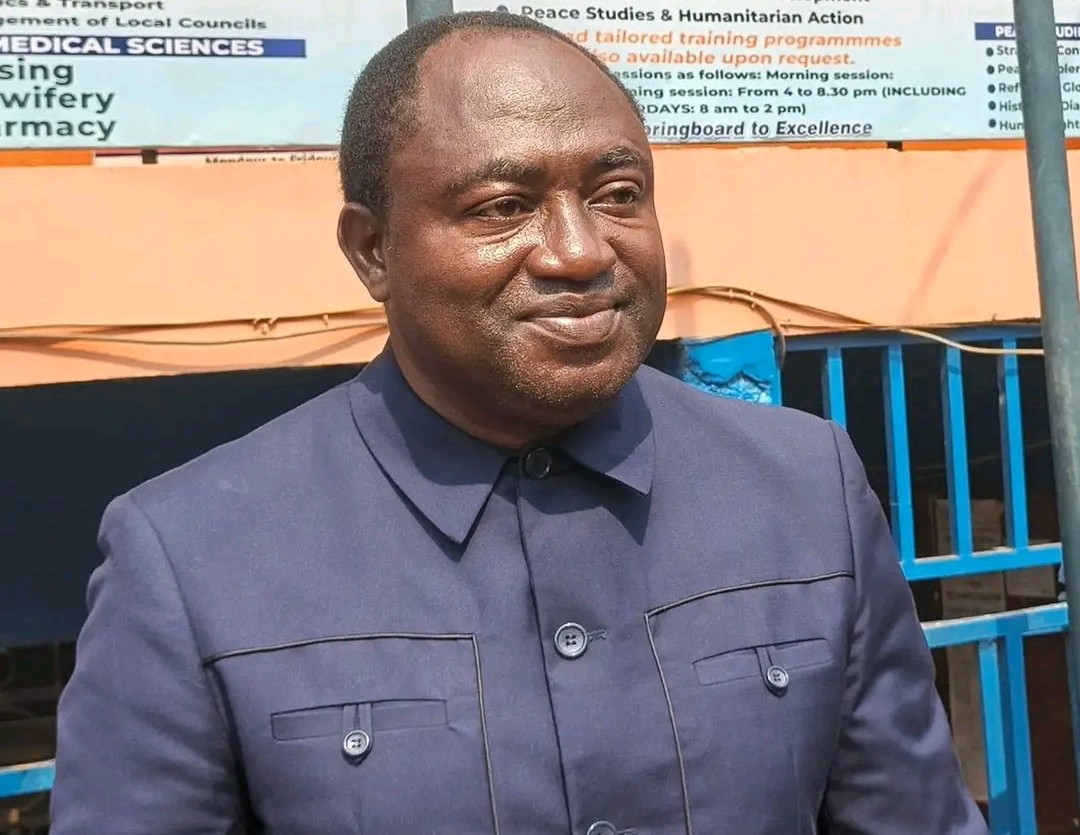
Cameroonian peace and conflict expert, Prof. Willibroad Dze-Ngwa, has said that the Anglophone Crisis cannot simply “die a natural death”, insisting that another serious dialogue, other than the 2019 Major National Dialogue, is needed if the conflict is to be genuinely resolved.
His remarks, made on Sunday, October 4, came in response to Prime Minister Chief Dr. Joseph Dion Ngute’s statement last Monday that the crisis could eventually “die a natural death” in the next 10 to 15 years, even if it is not resolved now.
The PM made the statement while launching a government-led community dialogue in the South West Region, where he called on elites, Chiefs and the civil society to convince separatist fighters to drop their arms.
In a detailed reflection, Prof Dze-Ngwa argues that time alone cannot resolve an ideological conflict like what is happening in the Anglophone Regions.
“Time can change the intensity of a conflict. Time can exhaust combatants. Time can reduce the frequency of violence. Time can alter political circumstances. But time, by itself, does not resolve the grievances, identities, memories and political ideas that sustain a conflict,” he wrote.
“An ideology cannot be defeated by the calendar.”
He stressed that the present crisis is no longer simply a military confrontation, warning that defeating fighters does not mean defeating the ideas that motivated them.
“You can destroy camps without destroying political grievances. You can silence guns temporarily without resolving the questions that made people take up guns in the first place. And you cannot bomb an ideology out of existence,” he said.
Dropping Arms Only is Treating Symptoms, Not Root Causes
Prof. Dze-Ngwa said that while calling on separatists to drop their arms is welcome, it addresses only the symptoms of the crisis rather than its root causes.
He noted that a young person born into a conflict environment may inherit not only physical displacement and trauma but also stories about injustice, exclusion, humiliation, resistance, and identity.
“If those narratives are not addressed through credible political processes, they can be reproduced in the next generation. That is how a six-year conflict can become a twenty-year conflict, and a twenty-year conflict can become a generational conflict,” he warned.
“The objective of peacebuilding, therefore, cannot simply be to wait for the conflict to become tired. It must be to make the conflict unnecessary.”
Prof. Dze-Ngwa drew lessons from other conflict-affected regions, including South Africa, Northern Ireland, and Colombia, to illustrate that deep political conflicts require political settlements, not simply the passage of time.
“A peace process that merely tells fighters to surrender their weapons without addressing the political environment that produced mobilisation risks treating the symptom while leaving the disease.”
What Should Be on the Dialogue Table?
Prof. Dze-Ngwa called for a structured political peace process with a defined mandate, clearly identified participants, an agreed agenda, credible facilitation, and mechanisms for implementation and verification.
“There should be no taboo subject. If an issue is important enough to have contributed to a war, it should be important enough to be discussed around a peace table. That does not mean that every proposal must ultimately be accepted. It means that every serious proposal should be heard, examined and negotiated.”
He listed key issues that should be on the table, including the roots of the Anglophone Problem and the nature and form of the state (for example federalism, decentralisation, regional autonomy, and special status).
He also mentioned the need for discussions on equal dignity, opportunity, and institutional protection for English-speaking and French-speaking citizens; the fate of detainees, victims, missing persons, as well as accountability, amnesty, pardons, transitional justice, and reconciliation; Ceasefires, security of civilians and combatants leaving the battlefield, and guarantees against reprisals.
He also proposed that future dialogue should consider the fate of IDPs and refugees; Rebuilding livelihoods and confidence; discuss the role of the diaspora; and provide guarantees on how dialogue recommendations will be implemented.
Dialogue Must Include Difficult Voices
Prof. Dze-Ngwa acknowledged the government’s Major Major National Dialogue held in 2019 to address the crisis but argued that another genuine and inclusive dialogue is needed if the crisis is to be resolved.
This is because the crisis has persisted since the dialogue, which was criticised by conflict experts and the civil society for not including separatist leaders, some of whom remain in jail.
Prof Dze-Ngwa emphasised the need for the government to talk frankly with separatists, adding that talking to an opponent is not the same as endorsing the opponent’s position.
“Dialogue is not surrender. Negotiation is not capitulation. Listening is not agreement. A government can defend the unity and sovereignty of Cameroon while still engaging seriously with people who challenge the existing political order.”
He said the negotiating table should be a place where competing visions are tested against the realities of peace, justice, security, and national coexistence.
“The key is not to invite everyone indiscriminately. It is to ensure that constituencies with a genuine stake in the conflict have credible representation and that the process has sufficient legitimacy to produce an outcome that people can own.”
Prof. Dze-Ngwa’s views add to those of human rights advocate Barrister Agbor Balla, who lauded the community dialogue launched in Buea, but said the government should look at the root causes of the crisis and that uncomfortable voices and those of people hard-pressed by the conflict must be heard too.
Balla, who attended the South West community dialogue in Buea, said the value of dialogue would be measured by what happens after everyone leaves the room.
About Prof Willibroad Dze-Ngwa
Prof. Willibroad Dze-Ngwa, PhD, is a Professor of Peace and Conflict Studies at the University of Yaoundé I and Founding President of the Heritage Higher Institute of Peace and Development Studies (HEHIPEDS).
He has pioneered scholarly research on the historical roots and contemporary dimensions of Cameroon’s Anglophone Problem.
His Master’s dissertation was on “The Anglophone Problem in Cameroon: A Historical Perspective from 1916 to 1995,” and his doctoral thesis examined “National Unity and National Integration in Cameroon, 1961–2000: Dreams and Realities.”