

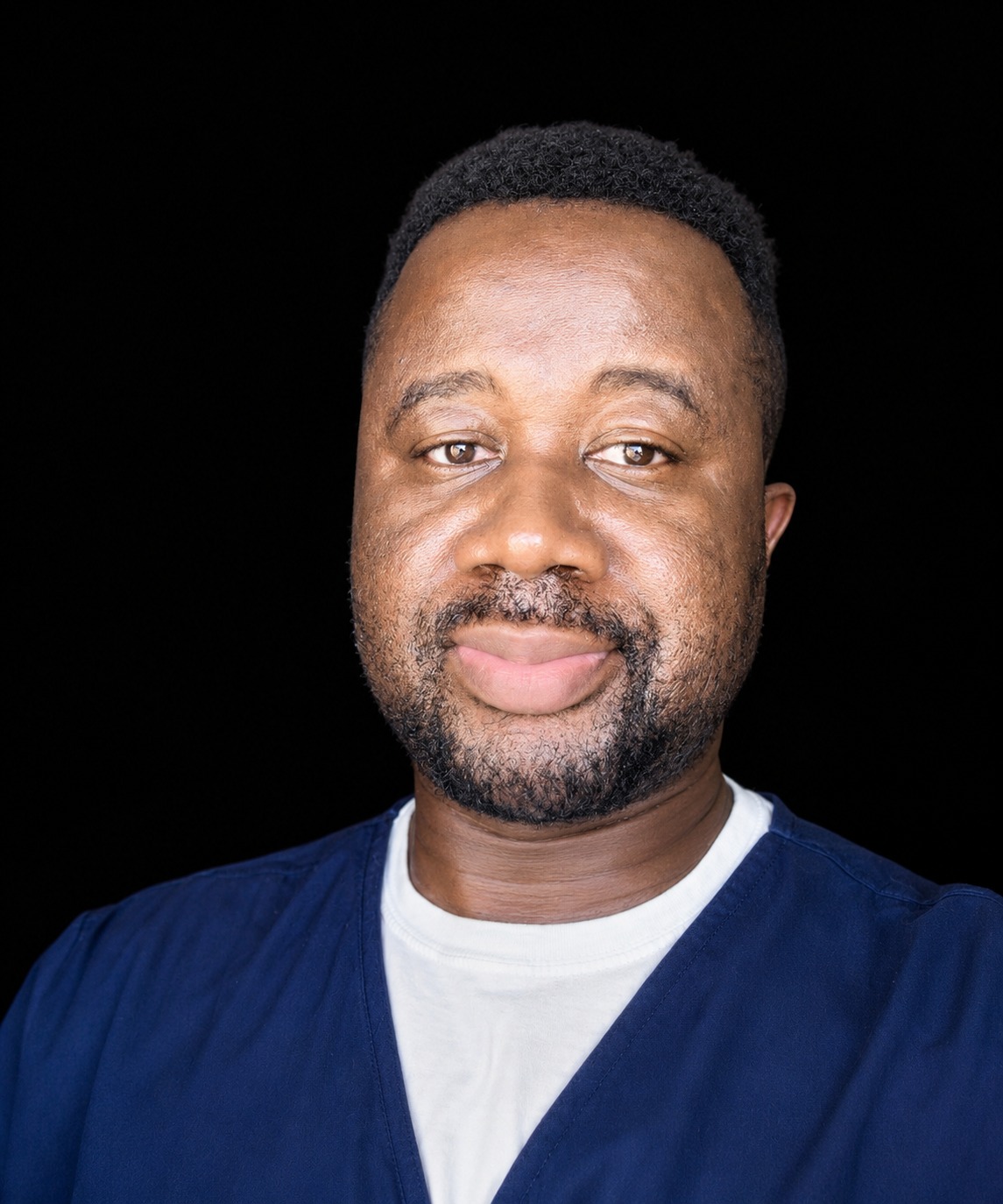
A U.S.-based Cameroonian nurse educator, researcher and healthcare policy advocate, John Nyah Mbout, has called for the creation of a unified, inclusive and legally empowered professional council for nurses, midwives and health technicians in Cameroon.
In an open letter addressed to the Ministry of Public Health, the Ministry of Higher Education and OPMS, Mbout argues that Cameroon can no longer regulate its modern healthcare workforce through fragmented structures, unclear equivalence pathways, weak coordination and outdated legal frameworks.
He says the proposed reform is not an attack on any institution, but a patriotic and evidence-based appeal to strengthen healthcare regulation, protect patients, support health workers and modernise Cameroon’s professional health governance system.
A Reform Rooted in Research
The open letter builds on Mbout’s published policy analysis titled Harmonizing the Training and Certification of Nurses, Midwives, and Health Technicians in Cameroon: A Policy Analysis, which examined long-standing challenges in the country’s health training and certification system.
His research identified several concerns, including overlapping ministerial mandates, inconsistent recognition of qualifications, weak transitional arrangements and limited regulatory infrastructure.
In the open letter, Mbout moves from analysis to advocacy, calling for a permanent statutory body that links education, licensure, professional accountability, workforce planning, clinical practice and patient safety.
According to him, Cameroon’s challenge is no longer limited to certificates, examinations or institutional authority. The deeper problem, he argues, is the absence of one integrated system capable of protecting the public while guiding health professionals fairly and transparently.
Why the 1984 Framework Needs Reform
Mbout acknowledges that the 1984 law regulating nurses, midwives and medico-sanitary professions played an important historical role in Cameroon’s healthcare system.
However, he argues that more than four decades later, the country’s healthcare environment has significantly changed. Cameroon now has university-based health programmes, BTS/HND pathways, public and private training institutions, degree-awarding institutions, specialised health technicians, digital health systems and growing demand for universal health coverage.
He says a legal framework designed for an earlier healthcare system cannot fully regulate today’s complex workforce. Without reform, he warns, the result will continue to be confusion, professional frustration, inconsistent standards and avoidable risks to patients.
Proposal for a Unified Health Council
The open letter proposes the creation of the Cameroon Unified Council for Nursing, Midwifery, and Health Technology Professionals.
Mbout argues that the council should not be a temporary committee or symbolic advisory body, but a legally empowered statutory institution with authority over professional registration, licensure, accreditation support, scope of practice, continuing professional development, disciplinary procedures, workforce data and competency-based standards.
He also says the council must be inclusive, bringing together the Ministry of Public Health, the Ministry of Higher Education, OPMS, universities, public and private training institutions, healthcare facilities, professional associations, employers, legal experts, patient representatives, accreditation bodies and development partners.
Inclusion as a Matter of Justice
A central message of the letter is that inclusion should not be treated only as a question of representation, but as a matter of fairness, justice and national unity.
Mbout notes that nurses, midwives and health technicians often pass through different training pathways but later serve the same patients, work in the same facilities and carry related responsibilities.
He argues that when one pathway is accepted while another is questioned without transparent competency standards, professionals become frustrated and the country wastes valuable human capital.
For him, Cameroon must move beyond fragmented credential debates. The key question, he says, should not simply be who trained where, but whether the country has a fair, reliable and competency-based system to determine who is qualified to practise safely.
Patient Safety and Universal Health Coverage
Mbout frames the proposed council as a patient safety reform, a public health reform and a universal health coverage reform.
He points out that nurses, midwives and health technicians serve at every level of Cameroon’s healthcare system, including community health programmes, vaccination campaigns, maternity units, laboratories, emergency rooms, operating theatres, rural health centres, district hospitals, regional hospitals and referral hospitals.
If training standards are unclear, certification pathways disputed, registration fragmented and scopes of practice inconsistently regulated, he argues, universal health coverage becomes weak in practice.
According to Mbout, access to healthcare is not enough. Care must also be safe, ethical, competent and accountable.
Bridging Education, Practice and Regulation
The proposed council, Mbout says, would not replace the mandates of the Ministry of Public Health or the Ministry of Higher Education. Instead, it would serve as a bridge between education, regulation, clinical practice and public protection.
Under the proposal, the Ministry of Higher Education would continue overseeing higher education quality, while the Ministry of Public Health would continue guiding health-sector priorities and service delivery standards.
The unified council would then ensure that professionals entering practice are competent, registered, accountable and committed to continuous development.
Mbout warns that when education and practice are not properly connected, graduates suffer, employers suffer, patients suffer and the country suffers.
Proposed Responsibilities
The proposed council would be responsible for creating one national professional register for nurses, midwives and health technicians, defining scopes of practice, supporting accreditation and quality assurance, publishing competency frameworks, creating fair equivalence pathways and regulating licensure renewal and continuing professional development.
It would also protect the public through ethical and disciplinary accountability, develop national workforce data, support transitional justice for affected graduates, promote professional dignity, monitor practice standards and advise the government on health workforce policy and reform.
Mbout argues that these functions are not administrative luxuries, but essential responsibilities of a modern regulatory body.
Avoiding Professional Division
The open letter also warns against professional elitism and division among healthcare workers.
Mbout argues that nurses, midwives and health technicians are not competitors in patient care, but interdependent professionals working within the same health system.
He notes that a laboratory result can guide a nurse’s intervention, a midwife may depend on diagnostic support, a health technician’s accuracy can influence clinical judgment, and a public health technician may help prevent disease before patients reach hospitals.
For this reason, he says a unified council would promote mutual respect, role clarity, accountability and team-based healthcare delivery.
A One-Year Roadmap
Mbout proposes a one-year roadmap for creating the unified council.
The process, he says, should begin with a joint communiqué from the Ministry of Public Health and the Ministry of Higher Education, followed by the creation of a national reform steering committee.
It would then include national mapping across all ten regions, regional consultations, legal drafting, a national validation conference, transitional professional registration, regional elections, central leadership elections and final submission of the legal framework for approval.
He argues that Cameroon can move from discussion to action within one year if the process is transparent, inclusive, legally guided and grounded in regional realities.
A Call for Action
Mbout says Cameroon must decide whether it will continue managing the symptoms of fragmentation or build the structure needed to solve the problem.
He insists that the issue goes beyond professional reform. For him, it is also a patient safety reform, a public health reform, a universal health coverage reform and a national development reform.
He argues that Cameroon’s patients deserve safe care, health professionals deserve clear standards, students and graduates deserve fair pathways, institutions deserve a coherent regulatory structure, and the healthcare system deserves modern governance.
In his view, the creation of a unified council is no longer only an institutional proposal, but a necessary step toward a safer, fairer and more accountable healthcare system in Cameroon.

