

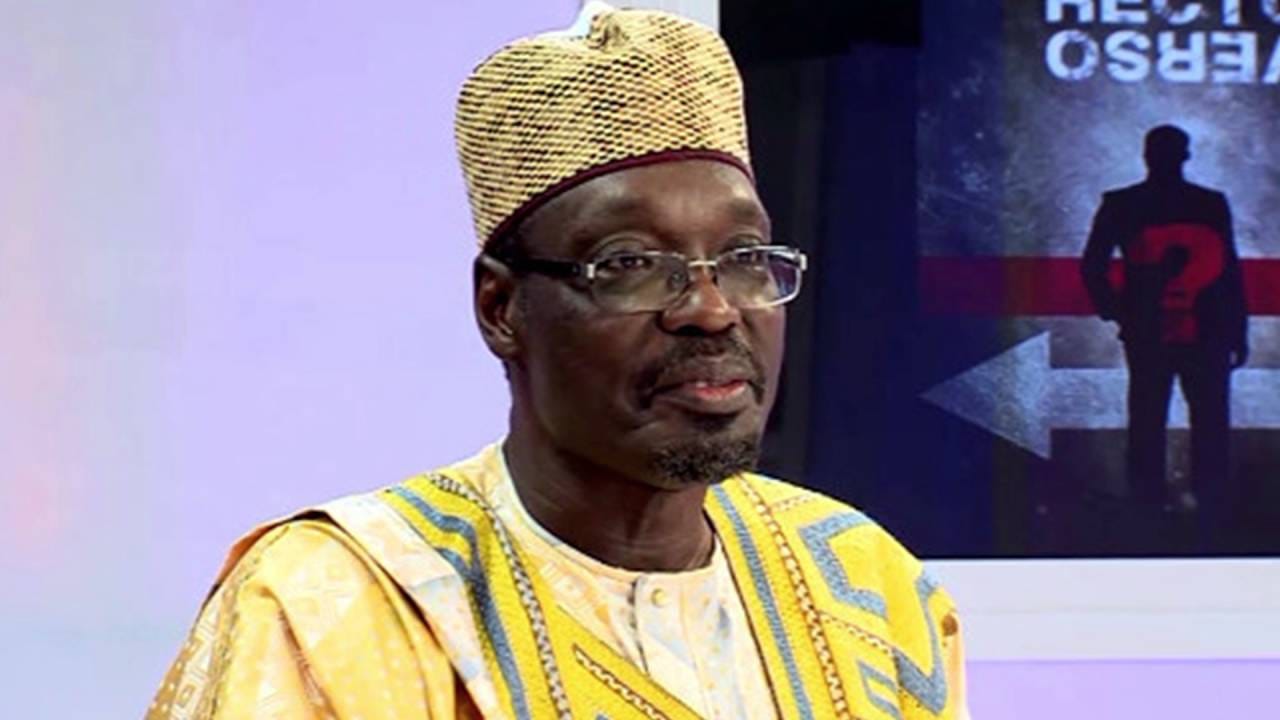
Issa Tchiroma Bakary, once the emblematic voice of Cameroon’s hardline defence of state unity, has surprised many with his June 2025 “Lettre aux Camerounais.” After years of unwavering loyalty to the regime’s repressive handling of the Anglophone Crisis, his recent statements hint at a potential ideological shift. But does this shift reflect genuine contrition—or strategic repositioning?
It is important to recall some of his arguments in relation to the Anglophone crisis.
Tchiroma’s Views on the Anglophone Crisis
In early 2017, when the government imposed an internet blackout on the Anglophone regions, Tchiroma initially denied the state’s involvement. He later admitted the shutdown was for “security reasons” to curb the spread of what he termed “false information” on social media. He consistently sought to minimise the scale of the violence. Tchiroma dismissed reports of numerous deaths at the hands of security forces as “phantasmagorical” and “a clumsy attempt at disinformation.”
Tchiroma was instrumental in framing the narrative of the Anglophone movement as a terrorist enterprise. He repeatedly referred to secessionists as “terrorists,” accusing them of recruiting mercenaries and importing weapons to destabilise the country and perpetrate mass killings to blame on the government. This rhetoric was extended to those who criticized the government’s handling of the crisis. When Catholic Bishops in the Anglophone regions raised concerns about a potential genocide, Tchiroma labeled them “objective allies of secessionists” who had endorsed the “dangerous and wild imaginations of the secessionists.”
Dismissal of Military Abuses
One of Tchiroma’s most controversial statements came in response to mounting evidence of atrocities committed by the military in the Anglophone regions. In a television appearance, he unequivocally stated, “The military does not kill,” a declaration that was widely condemned by critics as a blatant denial of the well-documented violence against civilians.
Tchiroma, as government spokesperson, vehemently rejected any external criticism of its actions. When the International Crisis Group (ICG) warned in 2017 that the government’s “murderous repression” could lead to an armed insurgency, Tchiroma convened a press conference to denounce the organisation as a “destabilisation agency” in the pay of secessionist movements. He accused the ICG, along with other human rights organisations like Amnesty International and Human Rights Watch, of being part of a “coalition in league against our country.”
From Government Spokesman to Presidential Candidate
Clearly, as Minister of Communication, Tchiroma Bakary consistently echoed the regime’s denial of legitimate grievances in the Anglophone regions. In 2018, he declared that Anglophone separatists were terrorists.
“Let the separatists understand that their battle is lost from the start,” he said.
His messaging routinely dismissed calls for inclusive dialogue, branding dissent as terrorism.
Now, as a presidential hopeful, he adopts a reconciliatory tone. He acknowledges the complexity of the crisis. “The crisis affecting them is not merely about security. It is also political, historical, and identity-based.”
This statement, absent during his tenure as a government spokesperson, suggests a broader understanding of the conflict’s roots.
A Measured Call for Decentralization
Tchiroma now proposes a restructured state. “I say it clearly: centralisation has failed.” This marks a clear departure from past government narratives, which emphasised a unitary state as sacrosanct. He further pledges to submit the future form of the state to a national referendum.
“We will initiate… a process for the Cameroonian people to choose… the form of the state.”
This rhetorical shift aligns with long-standing demands from Anglophone leaders for federalism—a concept previously taboo in official discourse.
Shift or Strategy?
While the updated rhetoric may resonate with voters fatigued by conflict, Tchiroma’s transformation invites scrutiny. As a long-time defender of policies that arguably exacerbated the crisis, his new stance raises a question: is this an evolution of thought or calculated political repositioning?
Despite his renewed emphasis on national unity and decentralisation, Tchiroma does not offer explicit apologies for his role in the earlier suppression of Anglophone voices. The tone is forward-looking but omits retrospective accountability.
Issa Tchiroma Bakary’s recent letter may reflect a political awakening—or a tactical realignment amid a changing electoral landscape. While his new position on the Anglophone Crisis is more inclusive, it lacks direct acknowledgement of his earlier role in framing the narrative against dissent. For Cameroonians—especially those in the Anglophone regions—this distinction will be crucial in determining whether his words signal credible change or political opportunism.

