


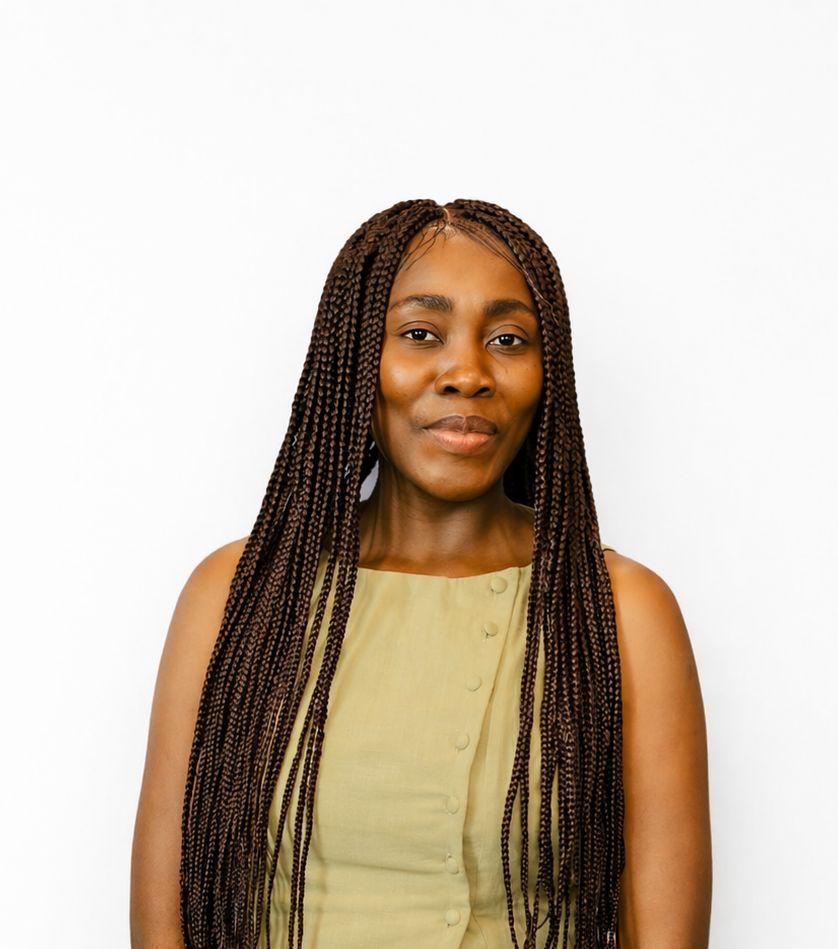
The University of Wolverhampton has awarded Cameroonian-born health advocate Marie-Claire Kofi an Honorary Fellowship in recognition of her outstanding contribution to supporting people living with sickle cell disease and improving health outcomes across local communities.
Marie-Claire Kofi, founder and CEO of Plasma of Hope, has received an Honorary Fellowship from the University of Wolverhampton for her exceptional contribution to health, wellbeing and community service.
The West Midlands-based advocate was honoured during the University’s graduation ceremony on Wednesday, July 29, 2026, in recognition of work that has helped hundreds of people and families affected by sickle cell disease, thalassaemia and related health complications.
For Marie-Claire, however, the Fellowship is more than a personal distinction. It is the public recognition of a journey that began with one of the most frightening experiences of her life—and of her decision to transform that experience into practical support and lasting change.
“I stand here today with a heart full of gratitude, and if I am honest, a little disbelief,” she told the University gathering.
“When I think about where this journey began, it was not in a boardroom or a lecture hall. It began in a hospital bed, with a body that had been let down, and a determination that refused to be.”
A crisis that became a calling
Marie-Claire lives with sickle cell disease, an inherited blood disorder that can cause episodes of severe pain, anaemia, organ damage and other life-threatening complications.
Many years ago, a serious sickle cell crisis resulted in her suffering a stroke. She says a lack of understanding of the condition in Accident and Emergency contributed to what happened.
“When I arrived in Accident and Emergency, the knowledge and awareness needed to treat someone like me was simply not there,” she recalled in her Fellowship speech. “I was a patient who needed to be seen, but a condition that was not fully understood.”
The experience could have left her angry and withdrawn. Some people advised her to sue the hospital. Instead, as she later explained, she wanted to recover and find a way to work with the same healthcare system whose gaps had placed her at risk.
She began asking how many other people living with sickle cell disease were entering hospitals without being fully understood, and how many families were silently carrying the emotional, financial and practical burden of the condition.
“That experience could have broken me,” she said. “But instead, it lit a fire.”
Her response was not simply to criticise the system, but to become part of improving it.
That decision eventually led to the creation of Plasma of Hope during the Covid-19 pandemic. The organisation was founded to raise awareness, support affected families and improve the understanding of sickle cell disease among healthcare professionals, students, schools and wider communities.
“I wanted to do something bigger,” Marie-Claire explained during an earlier strategy discussion. “I wanted to come back and work with those same people who did not know how to look after me—to bring that education so that what happened to me will not happen to the next person.”
Building Plasma of Hope
Plasma of Hope is now a registered UK charity supporting people living with sickle cell disease, thalassaemia and complications including stroke and disability. It also assists carers and family members within their support networks.
Its work has expanded across Walsall, Wolverhampton, Sandwell, Dudley, Coventry and neighbouring areas.
The charity provides advocacy, health education, wellbeing activities, emotional support, community outreach and assistance for people trying to navigate healthcare, housing, welfare and other services.
Marie-Claire says this community-based support is especially important after someone leaves hospital. Discharge does not necessarily mean that the crisis is over. People may still be managing pain, exhaustion, anxiety, reduced mobility, disrupted employment and the fear of another medical emergency.
Volunteers help people through this difficult period, providing a bridge between clinical treatment and the realities of returning home with a chronic condition.
The charity’s work also challenges the idea that supporting someone with sickle cell disease begins and ends with medication.
“Sickle cell disease is not just a physical condition,” Marie-Claire said. “It is a mental and emotional battle that is fought every single day, often in silence, often alone.”
She described the anxiety of not knowing when another crisis will occur, the pain of missed milestones and the exhaustion of repeatedly explaining an illness that remains invisible to many people.
“At Plasma of Hope, we have made it our business to see what others do not,” she said.
“We have created safe spaces where people feel heard, valued and understood. The mental health work we do may not always make the headlines, but for the people we support, it has made all the difference.”
Hundreds supported and thousands reached
Plasma of Hope’s 2024–2025 annual report records significant growth in the organisation’s community reach.
During the reporting year, more than 500 people received direct support through workshops, family activities, sports programmes and outreach clinics. More than 15,000 people were reached through awareness campaigns, social media and local press, while over 100 families accessed advice and practical support through the charity’s Community Fridays initiative.
The charity also delivered digital literacy and safety training to more than 80 young people, engaged more than 40 young people in creative workshops exploring resilience and blood donation, and worked with more than 30 families through a creative arts project delivered in partnership with the RAF Museum.
Its Family Sports Days, healthy eating initiatives, awareness campaigns and youth programmes address not only illness, but also confidence, social isolation, mental wellbeing and family resilience.
The report lists more than ten active partnerships involving NHS bodies, schools, funders and cultural organisations. Public records show that Plasma of Hope had 70 volunteers during the financial year ending March 2025—an indication of how far a project born from one woman’s experience has developed into an organised community movement. The charity’s reporting is publicly available through the Charity Commission.
During Community Fridays at Bloxwich Library, families can receive confidential guidance on sickle cell disease, thalassaemia, mental health, housing and benefits. Monthly outreach sessions in Coventry have extended similar support to more families.
Plasma of Hope has also worked with NHS and community partners on blood-donation awareness, Covid-19 vaccination, physical activity, pain management and early intervention.
Preparing the healthcare professionals of tomorrow
A central part of Marie-Claire’s work is improving the knowledge of professionals and students before they encounter someone experiencing a sickle cell crisis.
A radiographer by profession, she combines her health background with lived experience and years of direct engagement with families.
Her relationship with the University of Wolverhampton has enabled her to contribute to healthcare education by sharing her experience with students and supporting curriculum delivery.
Plasma of Hope has also provided placement opportunities for undergraduate and postgraduate physiotherapy students. These placements give students experience of community healthcare and allow them to understand how pain, mobility, mental health, social circumstances and family life interact outside a hospital setting.
In March 2025, University of Wolverhampton physiotherapy students delivered a community session on mobility, pain management and safe exercise pacing for people living with sickle cell disease.
Marie-Claire’s objective is not to ask students or professionals to feel sorry for patients. It is to ensure that they possess the knowledge, confidence and compassion required to respond effectively.
Professor Anand Pandyan, Dean of the University’s Faculty of Education, Health and Wellbeing, said Marie-Claire had supported both the School and Faculty generously.
“Her work has had a significant impact within our communities,” he said. “Her commitment to improving the lives of people living with sickle cell disease, supporting healthcare education and championing equitable access to care makes her a truly deserving recipient of this honour.”
Bringing sickle cell into schools
Marie-Claire’s advocacy also extends to children whose education is repeatedly interrupted by illness.
A child experiencing frequent crises or hospital admissions may miss weeks of teaching. Yet when the child returns, schools may not always have an effective plan to help them recover academically or reintegrate socially.
Marie-Claire has encountered cases in which repeated absence linked to illness was treated as misconduct or disengagement, rather than as a consequence of a serious health condition.
She wants teachers, school nurses, classmates and education decision-makers to understand sickle cell disease better. This includes recognising pain and fatigue, responding appropriately during a crisis, tackling bullying and stigma, and helping children catch up after extended absence.
Plasma of Hope has already trained members of Walsall’s School Nursing Team on sickle cell complications and good practice. Marie-Claire now wants education about the condition to become part of a much broader national conversation.
“I want this to be part of the school curriculum,” she has said. “I know cases of children who have been out of school, and when they returned, there was nothing done to help them catch up.”
Challenging stigma and silence
The physical effects of sickle cell disease are only part of the struggle.
Families may experience blame, secrecy and misunderstanding, particularly where knowledge about genetic inheritance is limited. Young people can face bullying, delayed life milestones and pressure to conceal their condition. Parents may blame one another, while adults can feel compelled to constantly justify pain that other people cannot see.
Marie-Claire believes stigma has also contributed to sickle cell disease receiving insufficient attention, investment and research.
She rejects language that reduces people to their diagnosis, including the term “sicklers”. Her preference is for person-first language: people living with sickle cell disease.
She also challenges the assumption that sickle cell disease should be dismissed as a condition affecting only one racial group. Although it disproportionately affects people of African and African-Caribbean heritage, migration and increasingly diverse family backgrounds make greater professional and public understanding essential.
For Marie-Claire, sickle cell is not only a community-awareness issue. It is also a matter of health equity, research, professional training, education and public policy.
Her priorities include stronger post-discharge support, better access to informed care, increased research attention, fairer prescription policies and meaningful educational assistance for affected children.
She also wants more opportunities to train professionals in hospitals and universities and to contribute to serious conversations involving the NHS, the Royal College of Nursing, policymakers, researchers and funders.
What she does not want is tokenistic visibility—being invited into important spaces merely as a symbol, without a genuine opportunity to shape decisions.
The Fellowship, she hopes, will help move her advocacy from strong regional impact to substantive national influence.
A mission connecting the UK and Cameroon
Although her work through Plasma of Hope is rooted in the West Midlands, Marie-Claire’s vision is also shaped by her childhood in Cameroon.
She remembers growing up with a chronic condition at a time when understanding, support and inclusion were limited. Her wider social-impact work through the Cameroon-based Bravelife Foundation reflects the same underlying commitment to wellbeing, dignity and opportunity.
The challenges facing people living with sickle cell disease are especially severe across Africa, where many families continue to confront limited access to diagnosis, specialist care, medication, genetic counselling and accurate information.
Marie-Claire wants to use her growing platform to connect community experience with professional education, research and practical reform in both the United Kingdom and Cameroon.
She is particularly interested in global health and in understanding how community interventions affect health outcomes. Her long-term ambition includes contributing more directly to research that can demonstrate what community organisations achieve and help successful interventions receive the support required to grow.
“This Fellowship does not belong to me alone”
In accepting the award, Marie-Claire repeatedly directed attention away from herself and towards the people who made the work possible.
“This Fellowship does not belong to me alone,” she said. “It belongs to every single person who has been part of this journey.”
She paid tribute to the Plasma of Hope team, its volunteers, the families who trusted the charity with their experiences, institutional partners and the communities that embraced its work.
She also acknowledged the family members who supported her through moments when the outcome of a severe crisis was uncertain.
Her father, siblings and late mother, she said, provided the love that held her together. Her children became her motivation to continue fighting and serving.
“I wish she was here to see this wonderful moment,” Marie-Claire said of her mother. “But I know she is looking down on me, proud of every moment she did not give up. And because she did not give up on me, I never gave up on myself.”
She described her children as her greatest motivation and the love surrounding her as the fuel behind everything she has built.
An honour—and a new beginning
The Honorary Fellowship recognises what Marie-Claire has already achieved, but its greatest significance may lie in what it makes possible next.
She wants the moment to open doors to national speaking platforms, stronger institutional partnerships, research opportunities and funding capable of taking community-led support to more people.
She wants health professionals to understand sickle cell before a patient enters their care. She wants families to receive support after hospital discharge. She wants children returning to school after a crisis to be helped rather than left behind. She wants policymakers to recognise sickle cell as a serious health-equity issue—and people living with the condition to be treated with dignity.
In one of the defining lines of her speech, she thanked the University for recognising that “change does not always begin in institutions”.
“Sometimes,” she continued, “it begins with one person in a hospital bed, asking why, and refusing to accept that things cannot be better.”
For anyone living with illness, disability or a setback that has made them question their value, Marie-Claire offered her own journey as evidence that adversity need not be the end of the story.
“Your story is not a barrier,” she said. “It is your testimony.”
The work, she stressed, remains unfinished. People living with sickle cell are still being misunderstood in emergency departments. Families continue to feel alone, and some students will enter the healthcare profession without enough knowledge of the condition.
“For as long as that is true, Plasma of Hope will be there,” she said.
“Today, I accept this Fellowship not as a conclusion, but as a beginning—a renewed commitment to keep pushing, keep advocating and keep building a world where no one with sickle cell disease is left without understanding, without support or without hope.”

