


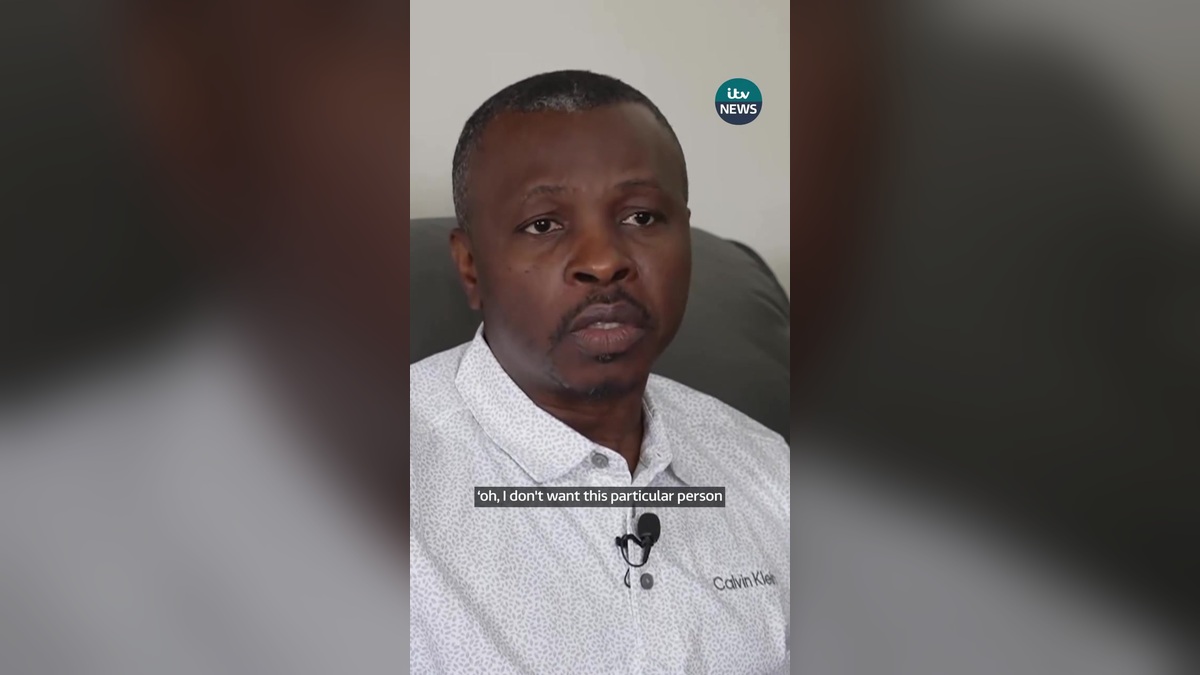
A Nigerian-born NHS radiographer has revealed how patients have questioned his competence, pretended not to understand him and refused to receive treatment from him amid reports of growing racism across Britain’s health service.
Dr Paul Awah, a diagnostic radiographer working in Bedfordshire, said migrant healthcare workers were increasingly being blamed for pressures facing the NHS and wider economic difficulties in the United Kingdom.
His testimony comes as a survey by the Society of Radiographers found a “noticeable” increase in racist and anti-immigrant abuse directed at healthcare workers during the past 18 months.
Migrant workers blamed for NHS pressures
Awah said some patients appeared to view migrant healthcare professionals as responsible for their inability to obtain medical appointments and other public services.
“People tend to blame you for being the reason that their lives are difficult,” he said.
“They think you’ve come in to claim all their benefits, to deprive them of certain needs, of NHS appointments, of having GP appointments, of getting appointments with their dentists.”
According to Awah, the situation has deteriorated particularly during the past year and a half, alongside increasingly hostile public debates about migration.
“We’ve had somebody being called a monkey. People are wondering why you are here. Why are you here?” he said.
The Society of Radiographers similarly reported cases in which NHS employees were described as “dirty foreigners”, ignored by patients or subjected to complaints because of their skin colour.
In one incident reported to the professional body, a patient refused to allow a Black radiographer to perform an X-ray. Another patient rejected a non-white sonographer who was expected to scan his pregnant wife.
Patients claim they cannot understand him
Awah said one form of discrimination he repeatedly encountered involved patients claiming they could not understand him.
“I speak English very clearly. It’s the only language I speak as clearly as I can speak,” he said.
“A patient will pretend not to understand me, not to know what I’m talking about, not to catch that accent.”
The Society of Radiographers said Awah had experienced this on at least two occasions when he believed the patients’ reactions were connected to his skin colour.
Other non-white NHS workers reported similar experiences. One radiographer with a mild Yorkshire accent was reportedly told that a patient could not understand her while she was wearing a headscarf.
Patients question his qualifications
Awah said some patients also questioned whether he was adequately trained or qualified to treat them.
“Some people [are] refusing care outrightly by saying, ‘Oh, I don’t want this particular person to attend to me,’” he said.
Others asked him: “Have you done this before? Where did you train? Did you train here in the UK?”
Awah is reportedly skilled in cannulation—the insertion of a tube into a patient’s vein—and is regularly called to assist when colleagues encounter difficult cases.
The Society of Radiographers said that on three occasions, patients questioned whether he had previously performed the procedure, even though colleagues had specifically requested his assistance because of his experience.
Awah said the implication appeared to be that if a white healthcare worker had been unsuccessful, a Black professional could not be expected to succeed.
‘It affects you mentally and emotionally’
Awah warned that repeated racism can have a serious psychological impact on migrant healthcare workers.
“It affects you mentally, emotionally, psychologically,” he said.
“As a migrant worker, you tend to work extra hard because you want to prove that you belong.”
He has also spoken about being described as a “leech”, despite working, paying taxes and supporting the NHS.
Awah said such treatment had affected his confidence and made him reluctant to apply for management positions. However, he stressed that most of the patients he treated remained appreciative of his work and that he had no intention of abandoning the NHS.
Survey finds rise in overt racism
The Society of Radiographers surveyed 381 members about racism they had either experienced or witnessed at work.
Respondents reported patients calling staff members “monkeys” and “dirty foreigners”, complaining about the skin colour of healthcare professionals and making comments about migrants “coming over here” and taking British jobs.
The Society said such incidents had become significantly more common over the previous 18 months amid a rise in anti-immigrant rhetoric.
Dean Rogers, the Society’s executive director of industrial strategy and member relations, described the reported rise as unacceptable and said racism, harassment, bullying and intimidation had no place in the NHS.
The organisation is calling on NHS trusts not only to record racist incidents but also to monitor how complaints are addressed and ensure affected workers receive appropriate support.
Approximately 21% of the NHS workforce are non-British nationals, while around one in four radiographers registered with the Health and Care Professions Council received their training overseas, according to the Society.
NHS says racist patients could be refused treatment
The latest NHS Staff Survey found that 9.26% of workers had personally experienced discrimination from patients or service users during 2025—the highest proportion recorded in five years.
NHS England said organisations must take meaningful action to prevent and respond to racist abuse, support affected employees and impose consequences on patients responsible for discrimination.
Those consequences could include refusing non-emergency treatment to patients who racially abuse healthcare workers.
For Awah, the problem extends beyond individual insults. He believes migrant workers are being made convenient scapegoats for problems involving the cost of living, pressure on public services and shortages within the NHS.
Yet those same migrant professionals continue to work long hours and provide essential treatment while facing demands to constantly prove that they are qualified—and that they belong.

