


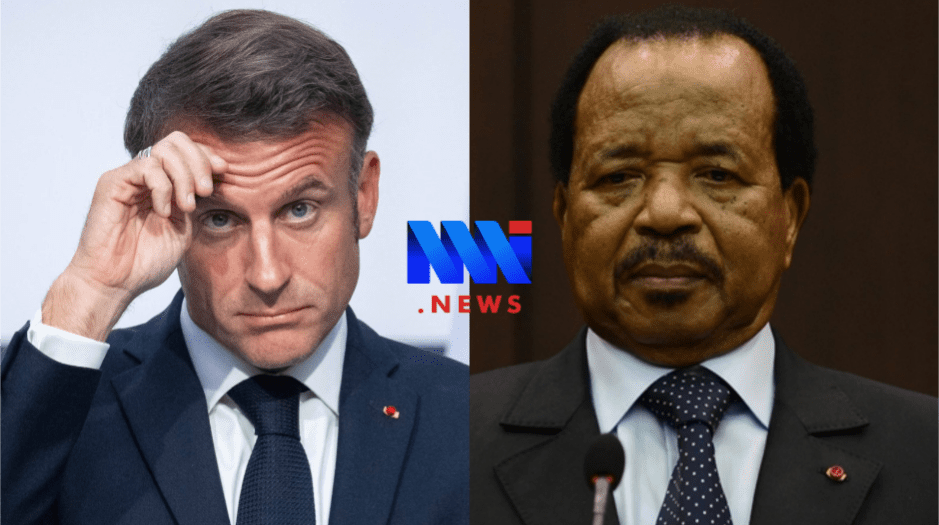
French President Emmanuel Macron has formally acknowledged that France waged a “war” in Cameroon marked by “repressive violence” during and after the African nation’s path to independence in the late 1950s.
In a letter sent last month to Cameroonian President Paul Biya — and published Tuesday, August 12, 2025, by the French presidency — Macron recognised France’s responsibility for the brutal campaign, saying, “It is incumbent on me today to accept France’s role and responsibility in these events.”
The admission follows the release of an official historical commission report in January 2025, which documented mass forced displacements, the internment of hundreds of thousands of Cameroonians, and the arming of militias to suppress the country’s push for sovereignty.
France’s Hidden Colonial War
Between 1956 and 1961, France’s military operations against Cameroonian independence movements claimed “tens of thousands of lives” and left vast numbers displaced, according to the report. The violence continued even after Cameroon officially gained independence from France on January 1, 1960.
For decades, the conflict remained largely absent from France’s public consciousness, overshadowed by Algeria’s war of independence (1954–1962). Much of the fighting in Cameroon involved African colonial troops rather than French conscripts, making it easier for the violence to remain hidden from domestic scrutiny.
The 14-member commission — composed of French and Cameroonian historians — examined the period between 1945 and 1971, using declassified archives, field surveys, and eyewitness testimonies. Macron had announced its creation during a 2022 visit to Yaoundé.
Lingering Colonial Ties
Even after independence, France maintained deep ties with Cameroon, backing President Ahmadou Ahidjo’s authoritarian government until his resignation in 1982. His successor, Paul Biya, now 92 and the world’s oldest serving head of state, has been in power for over four decades. He is seeking an eighth term in October’s presidential election, despite widespread criticism of political repression.
Cameroon’s constitutional court recently barred opposition leader Maurice Kamto — Biya’s main rival — from running, prompting condemnation from human rights groups.
Calls for Reparations
While veterans’ groups in Cameroon have welcomed Macron’s admission, some say it does not go far enough.
“France has committed many crimes in Cameroon. It can pay reparations,” said Mathieu Njassep, president of the Association of Cameroon Veterans (Asvecam). Macron’s letter made no mention of compensation.
The French president pledged to open archives to researchers and proposed a bilateral “working group” to monitor progress on historical research and education.
A Broader Reckoning With Colonial History
Macron’s move reflects his broader — and sometimes controversial — efforts to confront France’s colonial past. In recent years, he has commissioned reports on France’s role in the 1994 Rwandan genocide and the Algerian war, acknowledging “overwhelming responsibilities” in both cases. However, he has stopped short of issuing formal apologies for colonial-era atrocities.

