


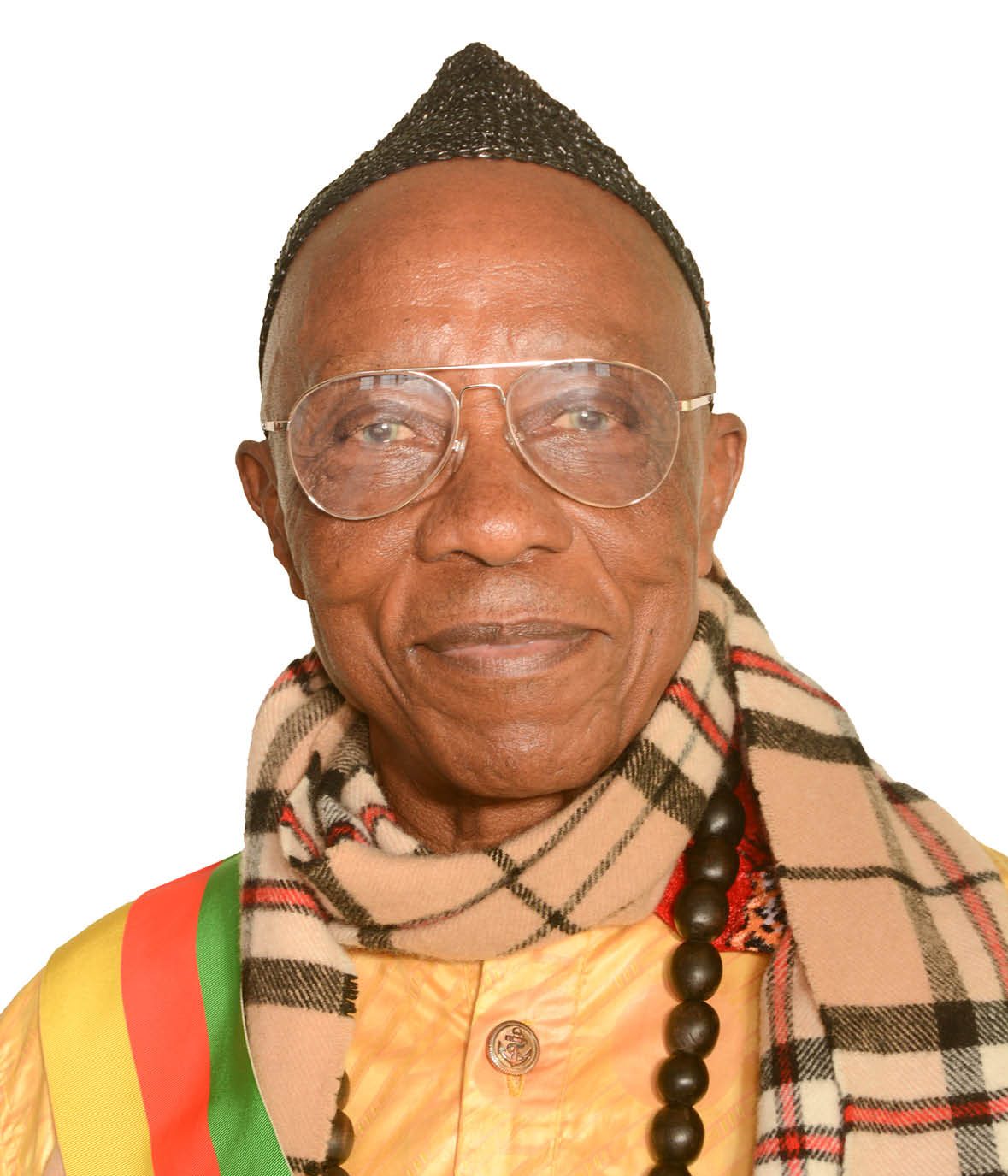
The death of Nfor Tabetando Ndiep Nso on April 21, 2026, closes a long and complex chapter in Cameroon’s political life. It is a life that spans traditional authority, elite state power, and the unresolved crisis of Anglophone marginalisation. He was a man of many identities: a lawyer, a traditional ruler, a senator, and a loyal figure within the ruling establishment. But in death, as in life, his legacy invites not just reflection, but scrutiny.
A Life in Power: From Bachuo-Ntai to the Senate
Born on October 29, 1950, in Bachuo-Ntai village in Manyu Division, South West Region, Tabetando’s early life was rooted in a community that would remain central to his identity and political base. Trained in law, he established himself professionally in Douala, building a career that positioned him within Cameroon’s emerging post-independence elite.
His rise took a decisive turn on January 20th, 1990, when he formally became the traditional ruler of Bachuo-Ntai. This role gave him more than ceremonial authority—it anchored him in the socio-political fabric of Manyu, where traditional leadership continues to carry weight in governance, conflict mediation, and community identity.
Over time, he moved deeper into national politics, aligning with the ruling Cameroon People’s Democratic Movement. His loyalty to the party and to President Paul Biya became a defining feature of his political career.
When Cameroon created its Senate in 2013, Tabetando was among those selected to shape the new institution. He rose steadily within its ranks, eventually becoming Vice President of the Senate—one of the highest legislative positions in the country. From that vantage point, he occupied a rare space: a senior Anglophone figure within a largely centralised political system.
For decades, he remained a constant presence in both Manyu and Yaoundé—bridging local authority and national power until his death in April 2026.
Beyond Politics and the Senate:
Beyond his formal legislative role, Nfor Tabetando Ndiep Nso occupied multiple centres of influence that extended his reach far beyond the Senate. As former President of the South West Chiefs Conference, he stood at the apex of traditional authority in the region, shaping the collective voice of chiefs at a time when their role in governance and conflict mediation remained highly sensitive. This position reinforced his status not only as a local ruler in Bachuo-Ntai, but as a key figure in the broader traditional leadership structure of the South West.
His influence also extended into the economic sphere, notably through his role as General Manager of Euroil. This combination of political office, traditional authority, and business leadership placed him firmly within Cameroon’s elite class—one of a small group of individuals able to navigate and consolidate power across multiple domains.
For critics, however, this concentration of influence also raises enduring questions about whether such positions translated into tangible socio-economic gains for communities like Manyu, where underdevelopment has remained a persistent reality despite decades of high-level representation.
Tributes
Official tributes and obituary statements following his death paint the portrait of a man whose life was defined by service, discipline, and achievement. They recall his early career as a teacher before he transitioned into law, where he built a reputation as a respected barrister.
His traditional enthronement in 1990 as ruler of Bachuo-Ntai is described as the beginning of a reign marked by unity and development, with references to educational initiatives such as the establishment of a Catholic senior seminary and plans linked to a Catholic university. His role in founding Euroil is also highlighted as a vehicle through which employment opportunities were extended to members of his community.
Yet these tributes, rich in praise and symbolism, also reveal the gap between official legacy and lived reality. While he is celebrated as a unifying figure and development-minded leader, the socio-economic conditions in Manyu are dire. It is characterised by poor infrastructure, isolation, and persistent insecurity, telling a more complex story. It is within this contrast that his legacy must ultimately be examined. Not only through the lens of titles held and honours received but also through the tangible impact felt by the communities he represented.
Manyu: Representation Without Transformation
Yet to understand the weight of his legacy, one must return to Manyu, not as a political base but as a lived reality.
Manyu Division has long produced influential figures within Cameroon’s political system. But despite this visibility at the top, development on the ground has remained limited. Roads are poor or non-existent, particularly in remote areas like Akwaya. Economic opportunities are scarce. Access to basic services remains uneven.
This disconnect, between political representation and material development, forms the backdrop against which Tabetando’s career is judged.
As both a traditional ruler and a senior state official, he was uniquely positioned to influence change. But the persistence of underdevelopment has led many to question whether that influence was effectively used—or whether it was constrained by the very system that elevated him.
The Anglophone Crisis: Leadership Under Pressure
The most defining test of Tabetando’s political life came with the Anglophone crisis.
Since 2016, Cameroon’s North West and South West regions have been engulfed in a conflict that has brought widespread suffering. In Manyu, communities in Mamfe, Upper Banyang, and surrounding areas have experienced violence, displacement, and prolonged insecurity.
As a senior Anglophone senator and traditional authority, Tabetando was expected to play a critical role in shaping the response—both as a voice of his people and as a bridge to the central government.
But his approach remained largely aligned with the state. He supported the government’s positions, emphasised stability, and avoided public confrontation with the system.
To some, this was strategic. It was a way to retain influence within a highly centralised structure. To others, it represented a failure of advocacy at a time when stronger, more visible leadership was needed.
In a crisis defined by deep mistrust, silence—or perceived silence—carries weight.
Borders, Insecurity, and the Limits of State Presence
Beyond the crisis, Manyu’s challenges have continued to evolve.
In areas like Akwaya, the absence of basic infrastructure has compounded insecurity. Reports of incursions by armed Fulani herdsmen from across the Nigerian border have added a new layer of vulnerability for already isolated communities.
These developments highlight a broader issue: the limited reach of the state in peripheral regions, even those represented at the highest levels of government.
As a senior senator, Tabetando had the platform to elevate these concerns. Yet the persistence of these issues raises difficult questions about the effectiveness of political representation in addressing structural neglect.
Loyalty, Power, and Their Limits
Throughout his career, Tabetando remained a loyal figure within the ruling establishment. His support for President Paul Biya was consistent and public, reflecting a political strategy rooted in alignment rather than opposition.
This loyalty secured his place within the system. It enabled his rise and sustained his influence.
But it also defined the limits of his political action.
In Cameroon’s centralised governance structure, regional elites often navigate a delicate balance between serving their communities and maintaining favour with the centre. Tabetando’s career illustrates how that balance can tilt toward preservation of power rather than transformation of conditions.
A Legacy of Influence—and Unanswered Questions
Nfor Tabetando leaves behind a legacy that is neither simple nor singular.
He was a pioneer of Cameroon’s Senate, a respected traditional ruler, and a figure of continuity within the political establishment. His life reflects the pathways through which power is acquired and maintained in Cameroon.
But it also reflects the limitations of that power.
Manyu remains underdeveloped. The Anglophone crisis continues to shape lives. Border insecurity persists. And the gap between political presence and lived reality remains wide.
His death, therefore, is not just the end of a political career. It is a moment that invites deeper reflection on the nature of representation itself.
The Unfinished Story
In the end, Tabetando’s life tells a broader story—about a system in which regional elites rise, but structural change remains elusive.
He did not operate outside that system. He worked within it, navigated it, and ultimately embodied it.
The question now is whether the next generation of leaders from Manyu—and from Cameroon more broadly—will follow the same path, or attempt something different.
Because for all his influence, one truth remains:
The story of Manyu, like the legacy of Nfor Tabetando, is still unfinished.

