

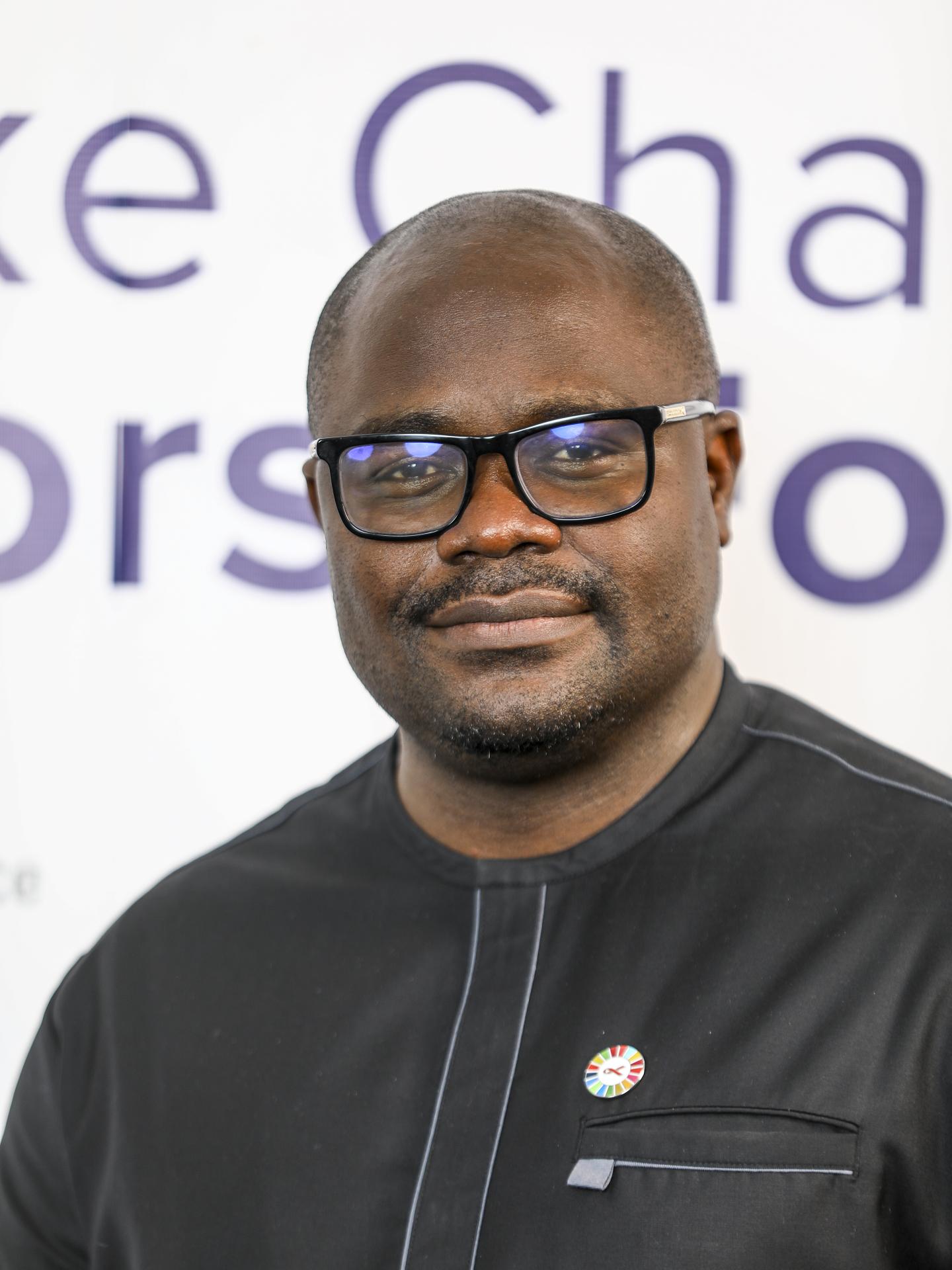
Cameroonian lawyer and international development expert Njoya Tikum has taken up office as the United Nations Resident and Humanitarian Coordinator in Burkina Faso, placing him at the head of the UN’s development and humanitarian operations in the conflict-affected West African country.
United Nations Secretary-General António Guterres appointed Tikum with the approval of the Burkinabè government. He formally assumed his duties on July 18, 2026, although the appointment was publicly announced by the UN Development Coordination Office on July 20, 2026.
As Resident Coordinator, Tikum will lead the United Nations country team and coordinate the work of the UN’s agencies, funds and programmes operating in Burkina Faso. His additional position as Humanitarian Coordinator will place him at the centre of efforts to organise emergency assistance for communities affected by violence, displacement, hunger and restricted access to essential services.
Nearly Two Decades of UN Leadership Experience
The United Nations said Tikum brings almost two decades of leadership experience in sustainable development, governance, peacebuilding, institutional reform, human rights and strategic partnerships.
Before his appointment in Burkina Faso, he served as Director of the United Nations Development Programme’s Sub-Regional Hub for West and Central Africa and as UNDP Resident Representative in Senegal.
From Dakar, he coordinated UNDP’s regional policy and programme support to 24 country offices across West and Central Africa, working with governments, regional institutions and development partners. He had led the sub-regional office since 2020 and was formally accredited as UNDP Resident Representative in Senegal in October 2023.
Tikum previously headed the United Nations Volunteers Regional Office for East and Southern Africa. In that role, he led an organisational restructuring and expanded the programme’s operations across 23 countries.
He has also worked for UNDP in Liberia, South Sudan and Ethiopia, as well as at the organisation’s headquarters in New York. His previous responsibilities included serving as Regional Policy and Programme Adviser on Anti-Corruption and Economic Governance at UNDP’s Regional Service Centre for Africa.
From Cameroon’s Legal Sector to International Development
Before joining the United Nations system, Tikum worked as an attorney and human rights practitioner.
He served as a Senior Human Rights Fellow at the Human Rights Institute of Columbia Law School and as a legal associate with the African Services Committee in the United States.
In Cameroon, he co-founded and directed the Centre for Public Interest Law, an organisation focused on legal advocacy and the protection of public and human rights interests.
Tikum studied law at the University of Yaoundé II in Soa, where he obtained a Licence and Maîtrise en Droit.
He later earned an LLM from Columbia University School of Law and another LLM in International Business Law from Central European University. He was also selected as a Maurice R. Greenberg World Fellow at Yale University in 2015.
A Difficult Assignment in Burkina Faso
Tikum takes up the position at a particularly challenging moment for Burkina Faso.
Years of armed violence involving Islamist groups, state forces and government-backed civilian auxiliaries have displaced communities and disrupted access to healthcare, education, food and basic services.
The United Nations estimates that approximately 4.5 million people in Burkina Faso require humanitarian assistance in 2026. Humanitarian organisations are seeking $658.5 million to assist 2.7 million of the most vulnerable people.
His arrival also comes amid strained relations between Burkina Faso’s military-led government and some international organisations.
The UN Human Rights Office began closing its operations in the country in June 2026 after the authorities suspended its activities. Burkinabè officials have accused some international organisations of interfering in the country’s internal affairs, while human rights groups have warned that the office’s departure could reduce independent scrutiny of alleged abuses.
What Njoya Tikum’s New Role Involves
UN Resident Coordinators serve as the Secretary-General’s representatives on sustainable development and lead cooperation between UN agencies and national authorities.
They bring together different parts of the UN system to support national priorities in areas including governance, health, education, food security, climate action, employment and economic development.
In countries facing major emergencies, Resident Coordinators may also serve as Humanitarian Coordinators. In that capacity, they work with UN agencies, non-governmental organisations, governments and international partners to organise relief operations and mobilise funding.
Tikum’s combined mandate will therefore require him to balance urgent humanitarian needs with longer-term efforts to strengthen resilience, public institutions and sustainable development.
His appointment represents another significant international leadership role for a Cameroonian within the United Nations system.

