

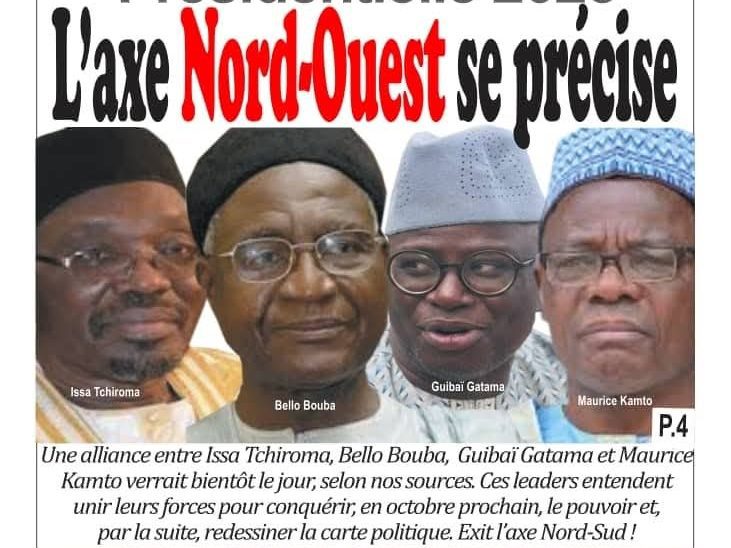
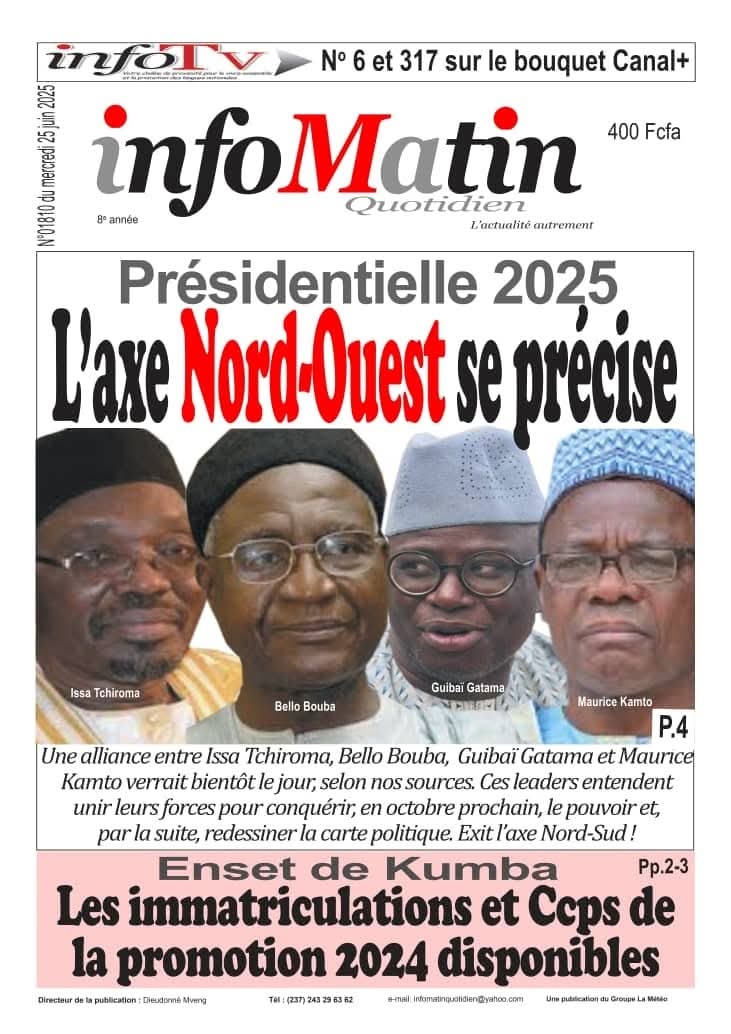
A recent report by InfoMatin, led by journalist Dieudonné Mveng, has sparked widespread speculation in Cameroon’s political landscape. The weekly newspaper revealed that a potential alliance involving Issa Tchiroma Bakary, Maurice Kamto, Bello Bouba Maigari, and Guibai Gatama may be forming ahead of the 2025 presidential election. If confirmed, this coalition could significantly reshape the political scene and challenge the dominance of the ruling party.
Signs of Political Realignment
According to InfoMatin, Bello Bouba Maigari—President of the National Union for Democracy and Progress (UNDP) and a State Minister—is reportedly facing increasing pressure from within his party to leave the government, following Issa Tchiroma Bakary’s recent resignation and presidential bid.
Notably, the Cameroon Renaissance Movement (MRC) invited Bello Bouba to its recent convention. In response, Bello Bouba extended an invitation to Maurice Kamto for his own party’s congress. For political observers, these exchanges are more than mere formalities—they may indicate the emergence of serious dialogue or a strategic political pact in development.
An Unlikely Yet Possible Coalition
The diversity of the potential alliance’s members is striking.
- Issa Tchiroma Bakary: Former Minister and longtime supporter of President Paul Biya, now presenting himself as a proponent of republican renewal.
- Maurice Kamto: A consistent opposition leader and vocal critic of the regime since the contested 2018 election.
- Bello Bouba Maigari: A veteran political figure from the northern region, often criticized for his silence during key national crises.
- Guibai Gatama: Journalist and founder of the citizen movement 11 Millions de Nordistes, representing politically engaged youth from the North.
If formalized, this coalition could unify segments of the institutional opposition, civil society, and northern elites historically sidelined in central decision-making processes. It may also create a new North-West political front, unprecedented in Cameroon’s recent history.
Strategic Alliance or Temporary Convergence?
Despite early enthusiasm, the alliance raises significant questions regarding its cohesion and longevity. How can Maurice Kamto, a staunch advocate for radical political change, align with Issa Tchiroma Bakary, who until recently served as a spokesperson for the current government? What influence would Guibai Gatama wield, especially given his appeal among northern youth and his insistence on independence from political elites? And will Bello Bouba Maigari break his longstanding loyalty to the ruling system?
Within the MRC, some leaders are urging caution.
“It’s normal for us to engage with all patriotic forces. But any alliance must be built on clear foundations and a shared vision,” said a party official.
At the UNDP, official comments remain limited, though internal discussions are reportedly intensifying, especially in regional branches where dissatisfaction with the central government is growing.
A Sign of Broader Political Transition
Beyond tactical calculations, this potential alliance reflects a broader political realignment. The Grand North, traditionally seen as a voting bloc for the ruling CPDM (RDPC), now appears intent on redefining its political relevance. Fatigue with the current administration, uncertainty over President Biya’s potential candidacy, and feelings of regional neglect are creating space for new political configurations.
If the coalition materializes, it could rejuvenate public discourse and challenge the structural dominance of the state machinery in presidential elections. However, significant hurdles remain. These figures must still reach consensus on a unified platform, articulate a coherent political vision, and appeal to a divided electorate.
Toward a Less Predictable Presidential Race?
For now, the surprise announcement has stirred renewed interest in the 2025 presidential race. For the first time in years, a viable political alternative appears to be forming—not from a single party structure, but from a cross-regional, cross-generational front comprising opposition leaders, civil society voices, and northern political actors.
While the path ahead is uncertain, this evolving dynamic suggests that Cameroon’s next presidential election may be far less predictable than in past cycles.

